Mastering Ghanaian Restaurant Etiquette: A Newcomer's Guide
Navigating a Ghanaian restaurant can be overwhelming for newcomers. This guide offers practical tips on ordering food, understanding local etiquette, and familiarizing yourself with popular dishes and spice levels.
Mastering Ghanaian Restaurant Etiquette: A Newcomer's Guide
There is a particular kind of magic that happens when you sit down at a Ghanaian chop bar for the first time. The air is thick with the smoky perfume of grilled tilapia and palm nut soup, the plastic chairs scrape cheerfully against the concrete floor, and somewhere behind a curtained doorway, someone is pounding fufu with the rhythmic confidence of a person who has done it ten thousand times. You are, without question, in one of the most rewarding culinary environments on the African continent — and if you have no idea what to order or how to act, you are not alone.
Ghana's food culture is generous, communal, and deeply proud. Whether you are a first-time visitor stepping off a flight at Kotoka International Airport, a returning diaspora member reconnecting with your roots, or an expat who has simply been too intimidated to venture beyond the hotel buffet, this guide is your definitive primer on Ghanaian restaurant etiquette. From chop bars in Nima to beachside grills in La, consider this your table-side companion.
Understanding the Landscape: Restaurants, Chop Bars, and Street Food Joints
Before we talk etiquette, it helps to understand what kind of establishment you are walking into. Ghana's dining scene exists on a beautifully democratic spectrum, and each tier comes with its own unwritten rules.
The Chop Bar
The chop bar is the soul of Ghanaian everyday eating. These are informal, often open-air eateries that serve traditional home-style cooking at prices that will make you question every restaurant bill you have ever paid in your life. Do not let the humble setting fool you — some of the most transcendent meals in Ghana happen here. A place like Eno Ama Chop Bar in Nima, which holds a perfect 5.0 rating on Khora, is a testament to the fact that excellence in Ghanaian cooking has nothing to do with tablecloths or ambient lighting. It has everything to do with the woman behind the pot.
The Street Food Vendor and Casual Joint
Street food stalls and casual joints occupy the middle ground — slightly more structured than a chop bar but still deeply embedded in local rhythm. Places like Waakye WuraGh in Westlands and the legendary Kenkey Stand Buffet represent this category with distinction. These spots often specialize in one or two dishes done exceptionally well. You come, you eat, you are grateful.
The Bar & Grill and Gastropub
On the more polished end, you have bar and grills like Ginkell's Palm Wine Bar in Labone, Wine n' Things in East Legon Hills, and The Natives Bar & Grill. These establishments blend Ghanaian staples with continental influences and a full drinks menu. The etiquette here begins to resemble that of a Western casual restaurant — but the food still carries the unmistakable fingerprint of home.
The Essential Vocabulary: What to Order and What It Means
A newcomer's greatest obstacle at a Ghanaian restaurant is not the food itself — it is the menu. Or rather, the absence of one. Many traditional chop bars operate entirely from memory and spoken word. A server may simply ask, "What do you want?" with the expectation that you already know. Here is the cheat sheet you need.
The Staple Carbohydrates
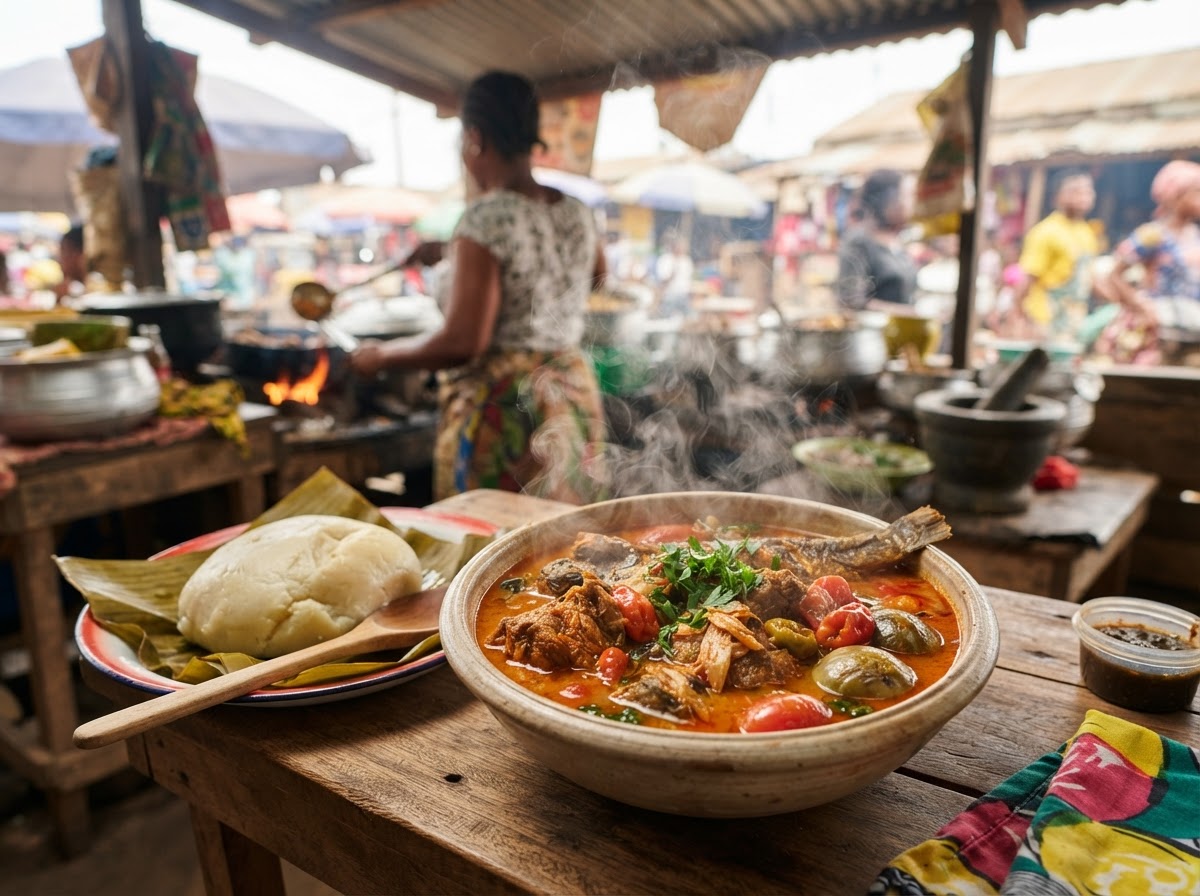
- Fufu: Pounded cassava and plantain, smooth and stretchy, typically served in soup. You do not chew fufu — you swallow it whole in small portions. This is not a suggestion; it is the correct method.
- Banku: A fermented corn and cassava dough, mildly sour, rolled into balls and served with pepper sauce, okra stew, or grilled fish. A staple of the Ga and Ewe peoples.
- Kenkey: Similar in origin to banku but firmer and wrapped in corn husks or banana leaves before steaming. Most famously paired with fried fish and shito.
- Waakye: Rice and beans cooked together with dried millet stalks that give it a distinctive reddish-brown hue. Often served with spaghetti, fried plantain, boiled eggs, stew, and a staggering array of sides. It is a complete meal experience disguised as a simple lunch.
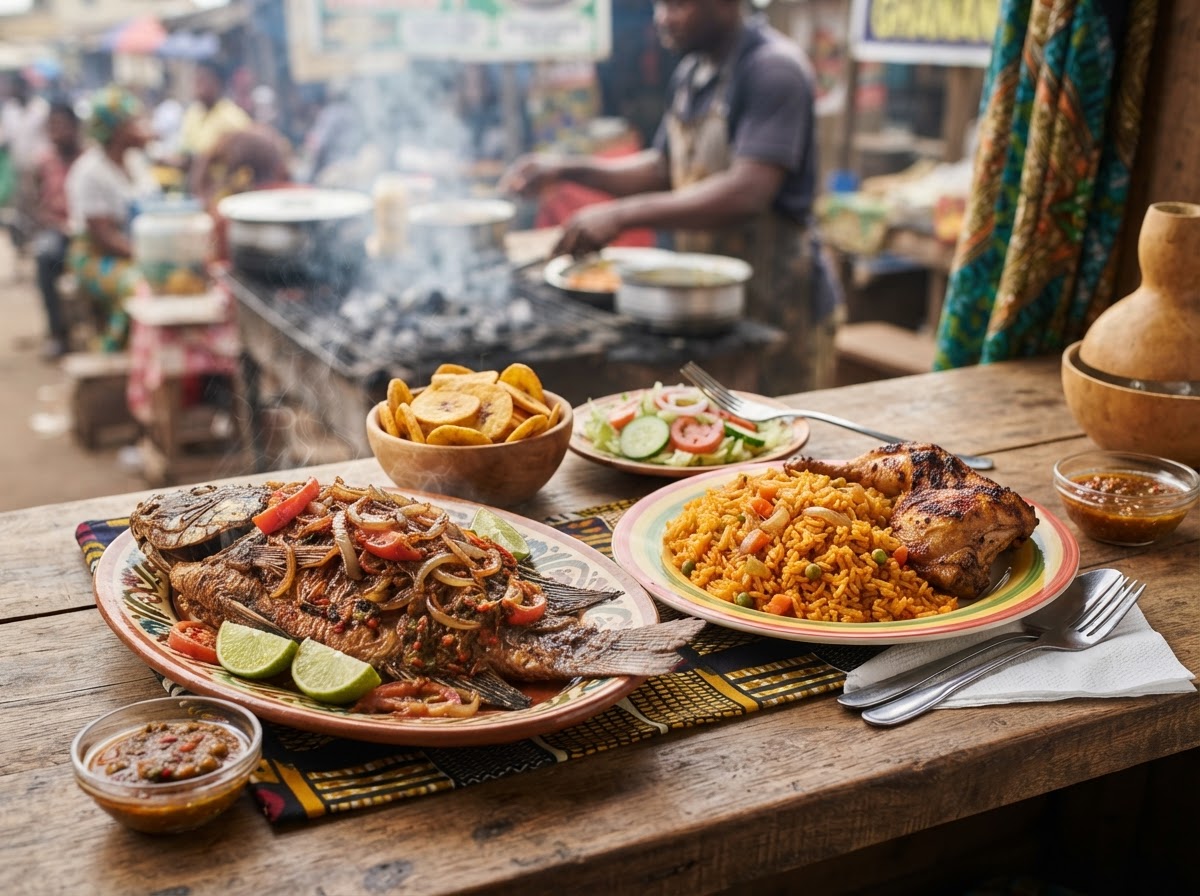
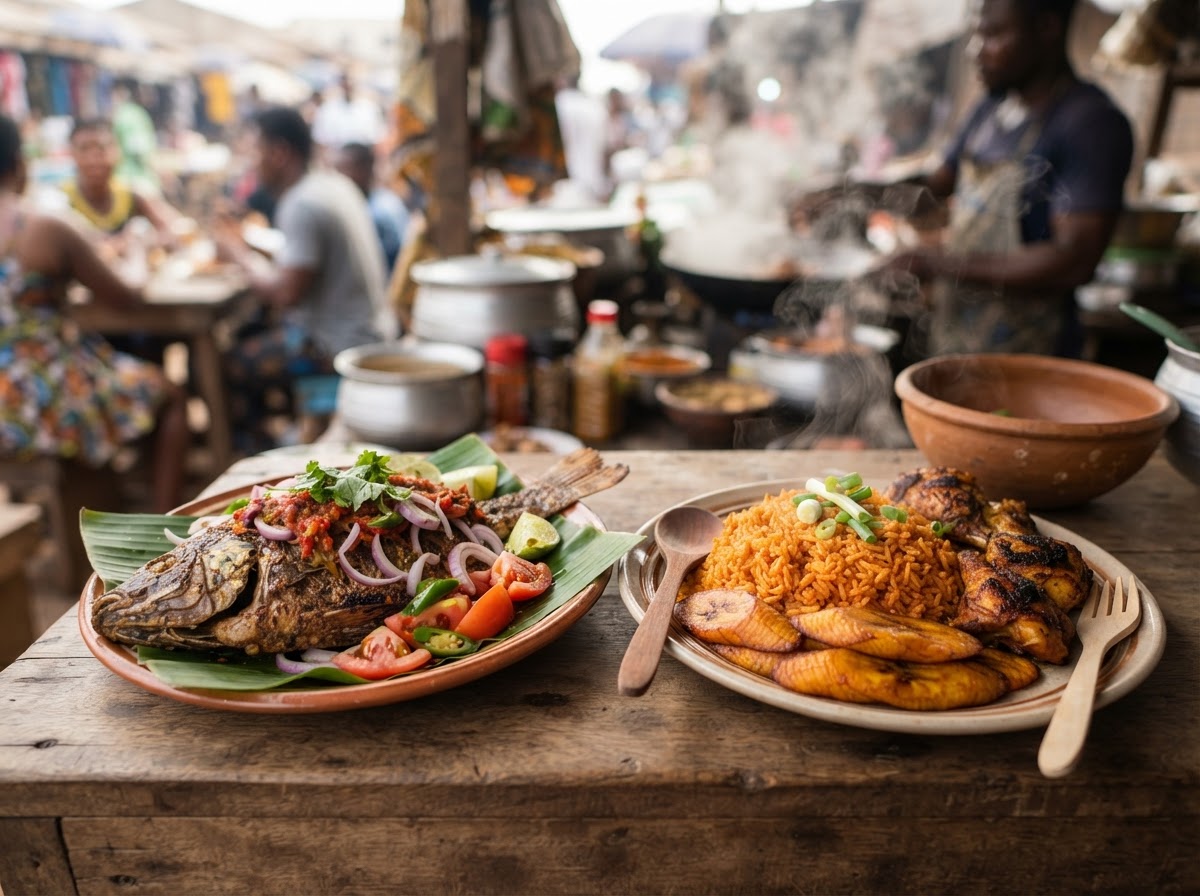
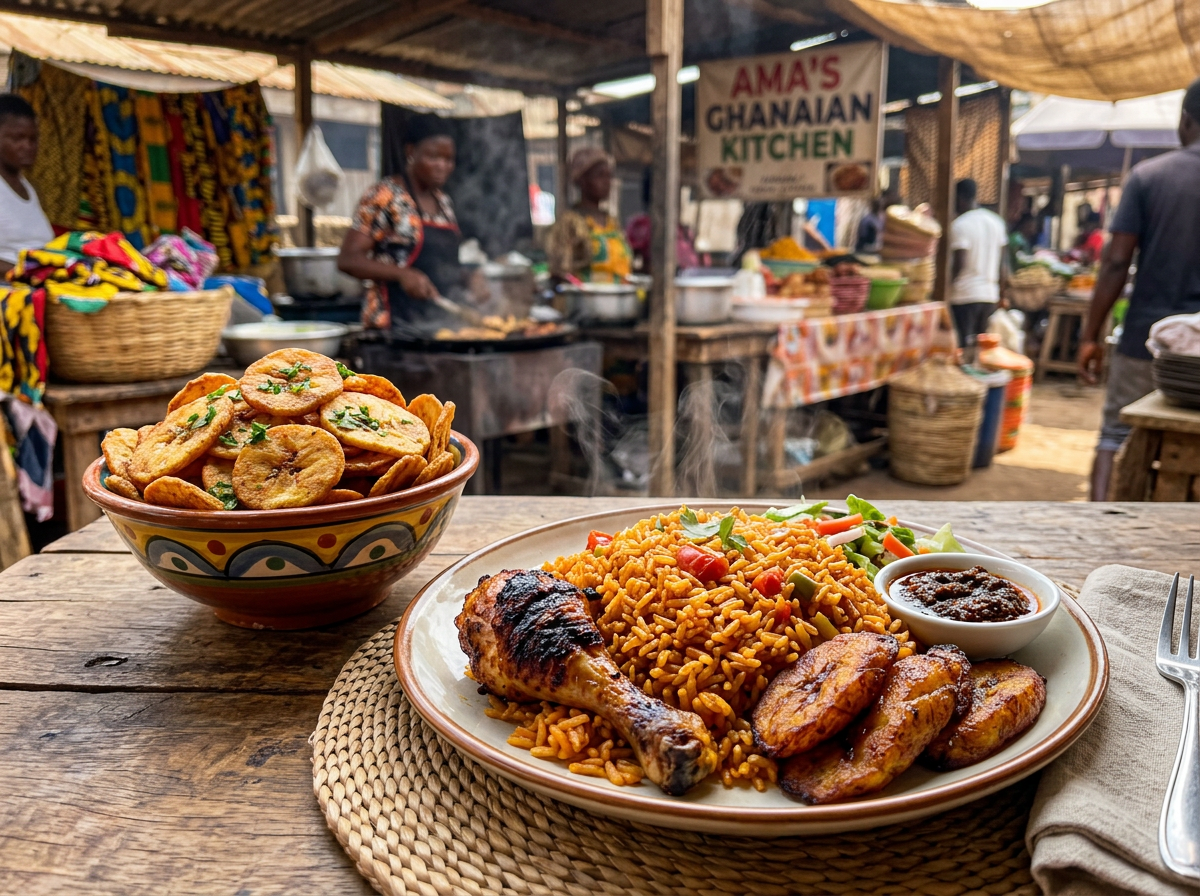
- Jollof Rice: The dish that launched a thousand Twitter debates. Ghana's version is smoky, deeply seasoned, and cooked over open fire — a preparation method that produces a crust at the bottom of the pot that Ghanaians call the party jollof and the rest of the world simply cannot replicate.
- Omo Tuo: Rice balls, soft and compact, served with groundnut soup or light soup. A popular Sunday dish and a comfort food icon.
The Soups and Stews
- Light Soup: A clear, tomato-and-pepper-based broth with meat or fish. Deceptively spicy. Do not be misled by the name.
- Groundnut Soup (Nkate Nkwan): Rich, nutty, warmly spiced, and typically served with fufu or omo tuo. One of Ghana's most beloved dishes.
- Palm Nut Soup (Abenkwan): Made from the pulp of palm fruits, this soup is thick, slightly sweet, and deeply aromatic. Often paired with fufu.
- Okra Stew: Viscous, savory, and wonderful with banku. The texture may challenge first-timers, but persistence is rewarded.
The Proteins
- Grilled Tilapia: The undisputed king of Ghanaian protein. Whole fish, grilled over charcoal, served with banku or rice and a side of shito and onions.
- Kontomire (Cocoyam Leaves) Stew: A vegetarian option that is hearty and nutritious, often served with boiled yam or plantain.
- Kelewele: Spiced fried plantain cubes — ginger, cayenne, cloves — sold as a snack or side dish, particularly in the evenings.
- Shito: Ghana's most iconic condiment. A deep, dark, intensely flavored chili-and-dried-fish paste. It goes on everything. Respect it.
Navigating Spice Levels: A Newcomer's Honest Warning
Let us be direct: Ghanaian food is spicy. Not in the performative way of a novelty hot sauce, but in a deep, structural, foundational way. Pepper is not a garnish in Ghanaian cooking — it is a primary ingredient. When you order light soup and they tell you it is mild, understand that "mild" is a relative term calibrated to people who have been eating pepper since infancy.
That said, Ghanaian cooks are accommodating. If you are spice-sensitive, say so clearly when you order: "Please, less pepper for me." Most vendors and restaurant kitchens will honor this request without judgment. What they will not do is make your food flavorless in the process — the beauty of Ghanaian seasoning is that spice is only one layer of a much more complex flavor architecture.
"The pepper is not there to hurt you. It is there to wake you up. Once you understand that, you understand Ghanaian food." — A chop bar auntie in Osu, on the subject of light soup
At more contemporary venues like Next Door Beach Restaurant or The Grill Bros GH in East Legon, the menu often includes continental options that tend to be milder, giving newcomers a gentler introduction while still offering the option to explore bolder Ghanaian flavors on the same table.
Etiquette at the Table: How to Eat Right and Eat Well
Proper Ghanaian restaurant etiquette is less about rigid rules and more about reading the room with respect and curiosity. Here is what you need to know.
The Right Hand Rule
When eating communal dishes or using your hands — as you will with fufu, banku, and kenkey — always use your right hand. This is a cultural norm observed across much of West Africa and carries social significance. Using your left hand to eat or pass food is considered impolite in most traditional settings.
Communal Eating and Sharing
Food in Ghana is fundamentally communal. It is not unusual to be invited to share a meal with strangers at a chop bar. The correct response to such an invitation is a gracious acceptance or, if you decline, a warm acknowledgment. Sitting beside someone eating without acknowledging them at all can read as cold or rude. A simple "Enjoy your meal" in Twi — "Di wo aduan" — is always appreciated.
Tipping Norms
Tipping culture in Ghana is evolving. Here is the practical breakdown:
- At chop bars and street food stalls, tipping is not expected but is genuinely appreciated. Rounding up to the nearest cedi or leaving a small amount is a kind gesture.
- At mid-range restaurants and beach grills like Pera Beach Club in La or Food Joint in Greater Accra, a tip of 10% is a good standard if service was attentive.
- At upscale bar and grill establishments like Wine n' Things or Ginkell's Palm Wine Bar, 10–15% is appropriate, especially if a service charge has not already been added to the bill — which it sometimes is, so check before you tip twice.
Ordering and Patience
At a chop bar or casual street food spot, food is cooked to order and is made fresh. This means waiting is part of the experience, not a failure of service. Resist the urge to appear impatient — it is considered disrespectful. Order your drink, settle into the atmosphere, and trust that the wait is engineering something worth eating.
Saying Thank You
Ghanaians are warm hosts, and expressing gratitude is part of the social fabric. After a meal at a chop bar, it is common practice to thank the cook directly — often referred to as "Auntie" regardless of whether you know her. A genuine "Auntie, the food was too nice" will earn you a smile that makes the trip worth it.
First-Timer's Mistakes to Avoid
Even the most well-intentioned newcomers occasionally stumble. Here are the most common missteps and how to sidestep them.
- Ordering fufu at a restaurant that doesn't serve it: Not every eatery makes fufu, and those that do often have specific hours for it — usually lunch. Call ahead or ask before you make it the centerpiece of your expectations.
- Asking for a fork with fufu: You can ask, and they will likely provide one, but know that eating fufu with a fork misses the entire sensory point of the dish. Lean into the experience.
- Assuming "fish" means fillets: In Ghana, fish is served whole. The head is considered the best part by many. If this surprises you at the table, now you know.
- Wasting food at a communal table: Taking more than you can eat is frowned upon, particularly in communal settings. Start with a modest portion and add more if you are still hungry.
- Treating street food vendors with less respect than sit-down restaurants: The woman selling waakye from a roadside stall at 7am is a culinary professional. Treat her as one.
Editor's Recommendations: Where to Begin Your Ghanaian Food Journey
If you are ready to stop reading and start eating — and you should be — these are the Khora-verified spots that offer exceptional first experiences for newcomers navigating Ghanaian restaurant etiquette for the first time.
Best for Authentic Chop Bar Experience
Eno Ama Chop Bar, Nima — A perfect-rated gem that represents everything a traditional Ghanaian chop bar should be. Come hungry, come humble, and come ready to eat with your hands. This is the real thing.
Best for the Iconic Waakye Experience
Waakye WuraGh, Westlands — If you are only going to eat waakye once in Ghana, make it here. The depth of flavors, the mountain of sides, and the vegetarian-friendly options make it a genuinely complete dining moment.
Best Buffet for Exploration
Kenkey Stand Buffet, Greater Accra — Perfect for newcomers who want to try multiple dishes without committing to a single choice. The buffet format lets you taste, compare, and discover your personal favorites before you become a regular anywhere.
Best Beachside Setting for First-Timers
Next Door Beach Restaurant, Greater Accra — A beautiful balance of atmosphere and authentic Ghanaian food. The setting eases first-timers into the experience without stripping away any of the cultural richness. Grilled seafood here is exceptional.
Best Upscale Introduction to Ghanaian Flavors
Wine n' Things, East Legon Hills — For those who want to explore Ghanaian food in a more structured restaurant environment, this gastropub delivers local flavors with a cosmopolitan sensibility. An excellent bridge between what you know and what you are about to discover.
Best for an Evening Out with Atmosphere
Ginkell's Palm Wine Bar, Labone — Combine a chilled glass of palm wine with a full Ghanaian menu in one of Accra's most distinctive settings. A genuinely unique experience that introduces you to Ghana's drinking culture alongside its culinary traditions.
Bottom Line
Ghanaian food is not complicated — but it is layered, proud, and deeply connected to identity, community, and history. Approaching it with curiosity rather than caution, with respect rather than hesitation, will open doors that no guidebook can fully prepare you for. The best meals in Ghana are not the ones where everything went according to plan. They are the ones where you asked a stranger what to order, trusted the auntie behind the pot, and discovered a dish that rewired your understanding of what food can be.
Mastering Ghanaian restaurant etiquette is not about memorizing a list of rules. It is about showing up with an open appetite and the willingness to be guided by people who have been eating this food — and perfecting it — their entire lives. Use your right hand. Try the shito. Order the fufu at least once. And when in doubt, follow your nose.
Ghana is waiting to feed you. The only thing left to do is sit down.
Explore verified ratings, menus, and directions for all restaurants featured in this guide on Khora — Ghana's premier restaurant discovery platform.
Ready to explore?
Search and discover the restaurants mentioned in this guide on Khora.
Find Restaurants