Northern Ghanaian Cuisine: Tuo Zaafi and Flavors of the North
Explore the distinct culinary heritage of Northern Ghana, from the hearty texture of Tuo Zaafi to the savory appeal of guinea fowl. Discover how these unique traditions differ from the coastal flavors of Accra.
Northern Ghanaian Cuisine: Tuo Zaafi and Flavors of the North
There is a moment — if you have ever sat beneath a neem tree in Tamale as the harmattan wind carries the scent of roasting guinea fowl across a bustling chop bar — when you understand that Northern Ghanaian cuisine is not simply a regional variation of what you find in Accra. It is an entirely different culinary world. One shaped by savanna grasslands, ancient trade routes, Islamic hospitality traditions, and the quiet ingenuity of communities who have coaxed extraordinary flavor from the land for centuries.
For too long, Ghana's food conversation has been dominated by the south — jollof rice debates, waakye lines snaking around corners in Osu, the smoky red stews of Kumasi. But travel north, past Kintampo and across the White Volta, and the food changes completely. The textures shift. The fermented smells deepen. The communal rituals around eating grow more elaborate. This is a cuisine that deserves not just a plate, but a full reckoning.
At Khora, we believe every Ghanaian table has a story worth telling. This is the story of the north.
The Landscape That Shapes the Food
To understand Northern Ghanaian cuisine, you must first understand the land. The Northern, North East, Savannah, Upper East, and Upper West regions occupy Ghana's vast interior — a world of flat, wide skies, laterite roads, baobab trees, and seasonal rivers. The climate is defined by a single rainy season and a prolonged dry season, during which the Saharan harmattan wind coats everything in fine dust.
This is not the wet, lush terrain of the forest belt. There are no cocoa farms here, no oil palms dripping with red fruit in the way you find in the Brong-Ahafo or Eastern regions. Instead, the northern cook works with:
- Sorghum and millet — the twin pillars of northern starch cookery
- Guinea fowl — the unofficial bird of the north, as culturally significant as it is delicious
- Dawadawa (locust bean) — a pungent, umami-rich fermented seasoning unlike anything in southern kitchens
- Shea butter — extracted from the shea tree, used in cooking long before it became a global cosmetic industry
- Groundnuts — roasted, ground, and woven into soups and sauces with remarkable depth
- Baobab leaves (kuka) — dried and powdered into soups, adding a distinctive viscous texture
- Yams and beans — supplementing the grain-heavy diet, especially in transitional zones
The result is a cuisine that is simultaneously earthy and complex — one that uses fermentation, drying, and slow cooking to build layers of flavor that no amount of store-bought seasoning can replicate.
Tuo Zaafi: The Soul of the Northern Table
If you ask anyone from Tamale or Bolgatanga what food defines home, the answer will almost certainly be tuo zaafi — affectionately known as TZ. This thick, smooth porridge made from fermented millet or sorghum flour is the north's answer to banku or fufu: a communal starch meant to be eaten with the hands, rolled into small balls, and dipped into a richly spiced soup.
But calling tuo zaafi simply a "porridge" is like calling a Ghanaian funeral simply a "gathering." The description is technically accurate and spiritually insufficient.
"TZ is not just food. It is how we gather. How we greet. How we mourn and celebrate. A home that serves TZ is a home that is serious about its people."
— A market woman in Tamale Central, overheard on a Tuesday morning
Tuo zaafi is almost always served with ayoyo soup — a bright green, viscous broth made from jute leaves (corchorus), seasoned with dawadawa, dried fish, and sometimes crayfish. The combination of the mildly sour TZ and the slippery, savory ayoyo soup is one of the great textural and flavor contrasts in West African cooking. Some households add dried okra powder to amplify the soup's characteristic draw — that silky, mucilaginous quality that northern food lovers recognize immediately and southerners sometimes need a moment to appreciate.
How TZ Differs from Southern Starches
Southern Ghana's preferred starches — banku, kenkey, fufu — are largely made from fermented corn or cassava, giving them a distinctly sour, heavy character. They pair with lighter, tomato-forward stews and soups like light soup, palm nut soup, and garden egg stew.
Tuo zaafi, by contrast, is made from fermented sorghum or millet, producing a slightly more neutral, earthier flavor. It is smoother than fufu and lighter than banku, designed to carry the bold, fermented flavors of the soups it accompanies without competing with them. Where southern starch is often the centerpiece, in northern cooking, TZ is a vehicle — a humble, essential one — for the extraordinary soups built around it.
Guinea Fowl: The Bird That Belongs to the North
No ingredient is more emblematic of Northern Ghanaian cuisine than the guinea fowl — the helmeted, spotted bird that struts through nearly every northern compound, market, and roadside stall. Ghana is one of West Africa's largest producers of guinea fowl, and the vast majority come from the north.
The guinea fowl is leaner and more intensely flavored than chicken. Its flesh is darker, firmer, and carries a gaminess that pairs beautifully with the bold, fermented seasonings of northern cooking. It is typically prepared in one of several ways:
- Grilled over open flame — rubbed with local spices and slow-roasted until the skin crisps and chars, sold at roadside spots from Tamale to Yendi
- Stewed in groundnut soup — the bird's richness amplified by the deep, roasted groundnut broth
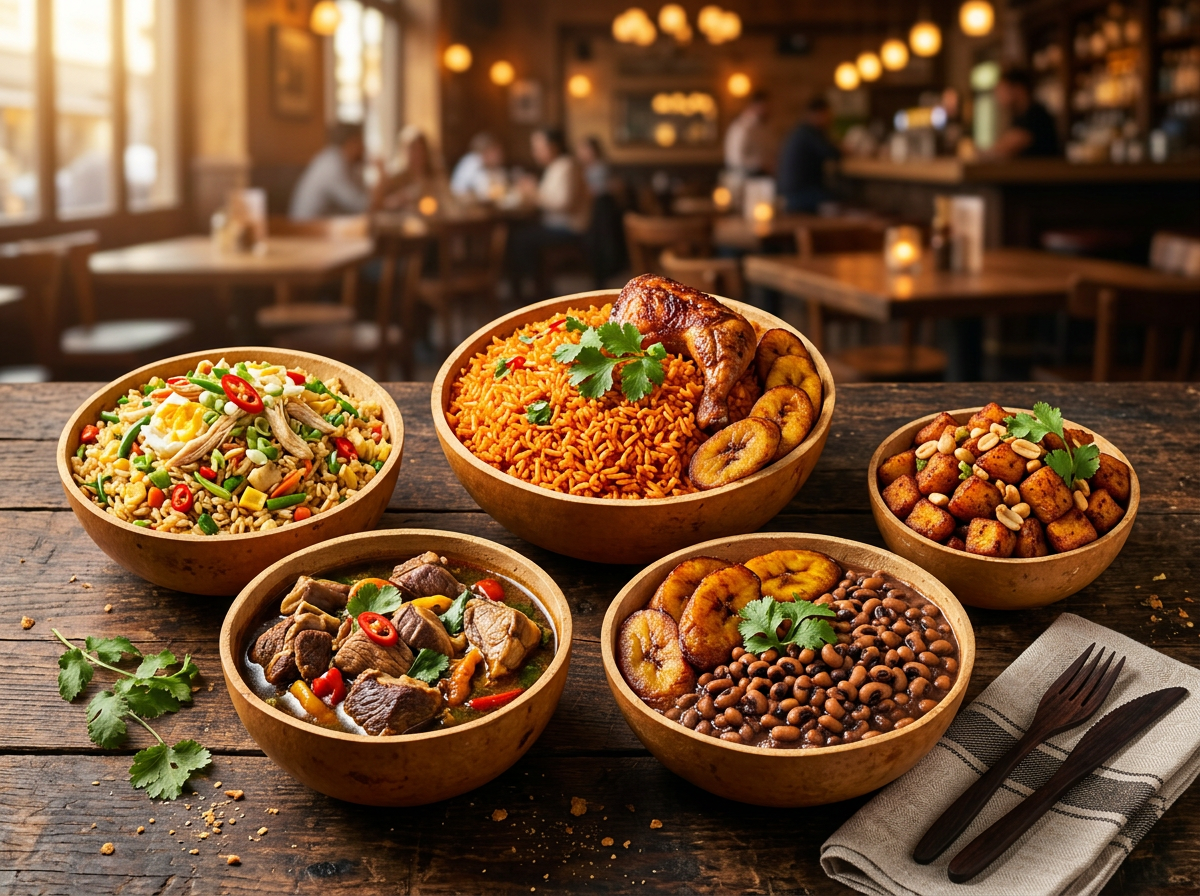
- Fried and served with jollof rice — a nod to the north's cultural hybridity and its embrace of shared West African food traditions
- Dried and smoked — preserved for the long dry season, adding smoky depth to soups and stews throughout the year
Beyond the kitchen, the guinea fowl holds deep cultural significance. In many northern communities, it is a gift of respect — presented to elders, offered to guests of honor, and slaughtered during important ceremonies and festivals. To receive a guinea fowl in the north is to receive genuine hospitality.
The Dawadawa Factor
No discussion of northern cooking is complete without lingering on dawadawa — the fermented locust bean seasoning that functions as the north's MSG, fish sauce, and parmesan rind rolled into one pungent, irreplaceable ingredient. Made from the seeds of the African locust bean tree (Parkia biglobosa), dawadawa is fermented over several days, developing an intensely funky, deeply savory aroma that announces itself the moment it hits hot oil.
Southerners occasionally use dawadawa, but it is in the north where it truly reigns — added to nearly every soup, stew, and sauce as a foundational seasoning. It is what gives ayoyo soup its particular depth. It is what makes a simple groundnut soup taste like it has been cooking for generations. Learning to love dawadawa is, in many ways, learning to love northern food on its own terms.
Beyond TZ: The Wider World of Northern Dishes
While tuo zaafi is the north's most iconic dish, the breadth of Northern Ghanaian cuisine extends far beyond it. The region's food culture is rich, varied, and shaped by the dozens of ethnic groups — Dagomba, Gonja, Mamprusi, Frafra, Kusasi, Wala, and many more — who have built distinct but overlapping culinary traditions across the savanna.
- Zom koom — a fermented millet drink, refreshing, lightly sour, and often the first thing offered to a visitor as a gesture of welcome
- Tubani — steamed bean pudding wrapped in leaves, a popular street food and festival snack with ancient roots
- Groundnut soup — richer and more peanut-forward than its southern counterpart, often cooked with guinea fowl or dried fish
- Zaflele — a dish of cooked grains and beans, humble and filling, eaten widely in rural communities
- Koko — spiced millet porridge, the north's beloved breakfast, often consumed with koose (bean fritters) or with dawadawa and pepper
- Shea butter-cooked meats — a distinctive northern technique where meat is cooked or finished in shea butter rather than palm oil, producing a subtler, nuttier richness
These dishes reflect a cooking philosophy built on patience, resourcefulness, and community. Northern Ghanaian food is rarely fast food in its traditional sense — it is slow food in the deepest meaning of the term, food that demands time, skill, and the willingness to sit together and share.
Cultural Significance: Food as Identity and Ceremony
In the north, food is inseparable from identity. The Dagomba people of the Northern Region, for instance, have elaborate food customs tied to chieftaincy, Islamic practice, and seasonal festivals. During the Damba festival, which celebrates the birth of the Prophet Muhammad and Dagomba royal traditions simultaneously, guinea fowl and TZ appear on tables across the region in quantities that speak to both devotion and abundance.
Ramadan in Tamale transforms the city's food culture visibly and beautifully. Iftar spreads along Salaga Road and in the city's many chop bars feature elaborate arrays of grilled meats, fermented porridges, groundnut soups, and sweet drinks — a culinary expression of a community breaking fast together with generosity and joy.
The communal bowl is also a recurring feature of northern eating culture. Meals are frequently shared from a single large bowl or calabash, with family members and guests eating together — a practice that reinforces social bonds and communicates welcome. To be invited to share someone's TZ in the north is not a casual gesture. It is an act of genuine inclusion.
"In the south, you eat beside someone. In the north, you eat with them."
— A common saying among northern Ghanaians living in Accra
Editor's Recommendations: Where to Eat Northern Ghanaian Cuisine
The good news for food explorers is that Tamale — the north's vibrant capital — and surrounding towns like Yendi, Salaga Road, and Banvim are home to a growing constellation of excellent dining spots that celebrate both traditional northern food and the cosmopolitan, multicultural appetite that defines modern northern Ghana. Here are some top picks from the Khora database:
For the Full Northern Experience
Azumi Food Complex in Tamale Central is a standout destination for those wanting to anchor themselves in the flavors of the north while also exploring the city's broader culinary range. With a perfect 5.0 rating and a menu spanning Ghanaian, West African, and Continental cuisine, Azumi is where locals and visitors alike gather to eat seriously and well. Expect hearty northern staples alongside rice dishes and the kinds of generous portions that the north is known for.
Sahada Food Complex on Salaga Road is another essential stop — a sprawling, welcoming establishment with an impressive menu that ranges across Ghanaian, West African, Chinese, and seafood offerings. Its 5.0 rating reflects consistent quality and the kind of warm service that makes you want to linger long after the meal is finished.
For Grilled Guinea Fowl and BBQ
Peace Joint in Yendi is exactly the kind of place that gives northern Ghana's food scene its soulful, unpretentious character. A bar and grill with a 5.0 rating and a menu that delivers on Ghanaian and continental grill classics, this is where you go for smoky, perfectly charred meats in the company of great music and lively conversation.
Awen's Cuisine in Banvim rounds out the grill experience beautifully — a 5.0-rated international restaurant with strong Ghanaian and seafood credentials, ideal for those who want the flavors of northern cooking in a slightly more polished setting.
For International Flair with Northern Roots
ALKIDOOR RESTAURANT in Yendi is one of the north's most impressive culinary destinations — a 5.0-rated establishment whose menu spans Ghanaian, West African, Chinese, Lebanese, Continental, and seafood cuisine. It speaks directly to Yendi's character as a culturally layered town with deep historical roots and a contemporary, outward-looking appetite.
INNY'S EATERY in Banvim mirrors this multicultural ambition, offering an expansive menu that reflects the north's growing cosmopolitan identity. With Lebanese and West African influences alongside Ghanaian staples, Inny's is a microcosm of what makes northern Ghana's food scene so exciting right now.
For a Quick, Satisfying Bite
Rice and Grills in Tamale Central is the kind of reliable, crowd-pleasing spot that every food city needs — a 5.0-rated restaurant with a broad menu that delivers on everything from Ghanaian comfort food to Lebanese-influenced dishes and fast food favorites. Perfect for a midday meal when you want quality without ceremony.
The Joint Special Diets in Banvim deserves special mention for food travelers with dietary considerations — a rare 5.0-rated spot explicitly catering to vegetarian and special diet needs alongside its broader Ghanaian and international menu. In a food culture where meat and fish are so central, finding a spot this thoughtful is genuinely exciting.
Bottom Line: Why Northern Ghanaian Cuisine Deserves the World's Attention
Northern Ghanaian cuisine is one of West Africa's great culinary treasures — complex, deeply rooted, culturally rich, and still largely undiscovered by the wider world of food media. While the south's jollof rice continues its international press tour, TZ and ayoyo soup, guinea fowl grilled over open flame, and dawadawa-spiced groundnut soups quietly represent a cooking tradition every bit as sophisticated and satisfying.
The differences from southern Ghanaian food are real and meaningful: the grain-based starches versus cassava and corn, the pungent fermented seasonings versus brighter tomato-forward stews, the shea butter in place of palm oil, the lean gaminess of guinea fowl against the ubiquitous chicken of Accra's chop bars. But these are not signs of a lesser cuisine. They are signs of a different landscape, a different history, and a different but equally profound relationship between people and food.
Tamale is growing — in population, in cultural confidence, and in culinary ambition. The restaurants populating Khora's northern database are proof that the north's food scene is vibrant, diverse, and ready to be discovered. Whether you are a first-time visitor navigating Tamale's streets or a returning traveler who already knows the particular joy of a perfectly made tuo zaafi, the north has something extraordinary to offer you.
Come hungry. Come curious. Come ready to eat with both hands.
Ready to explore?
Search and discover the restaurants mentioned in this guide on Khora.
Find Restaurants