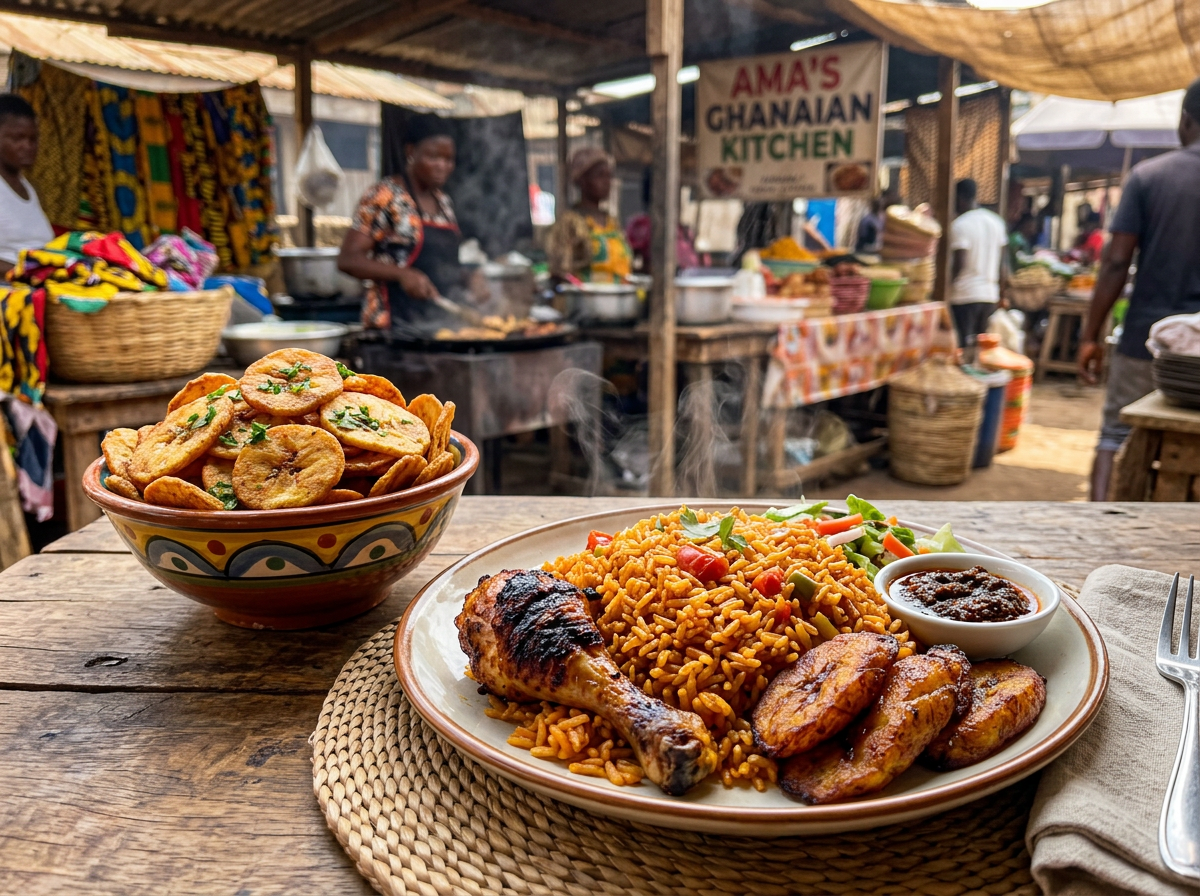
Traditional Ghanaian Cuisine: A Deep Dive into Ghana's Flavors
Discover the vibrant heritage behind traditional Ghanaian cuisine, from the complex flavors of fermented locust beans to the rich depth of palm oil. Explore how these historic ingredients and regional staples are shaping the global food scene.
Traditional Ghanaian Cuisine: A Deep Dive into Ghana's Flavors
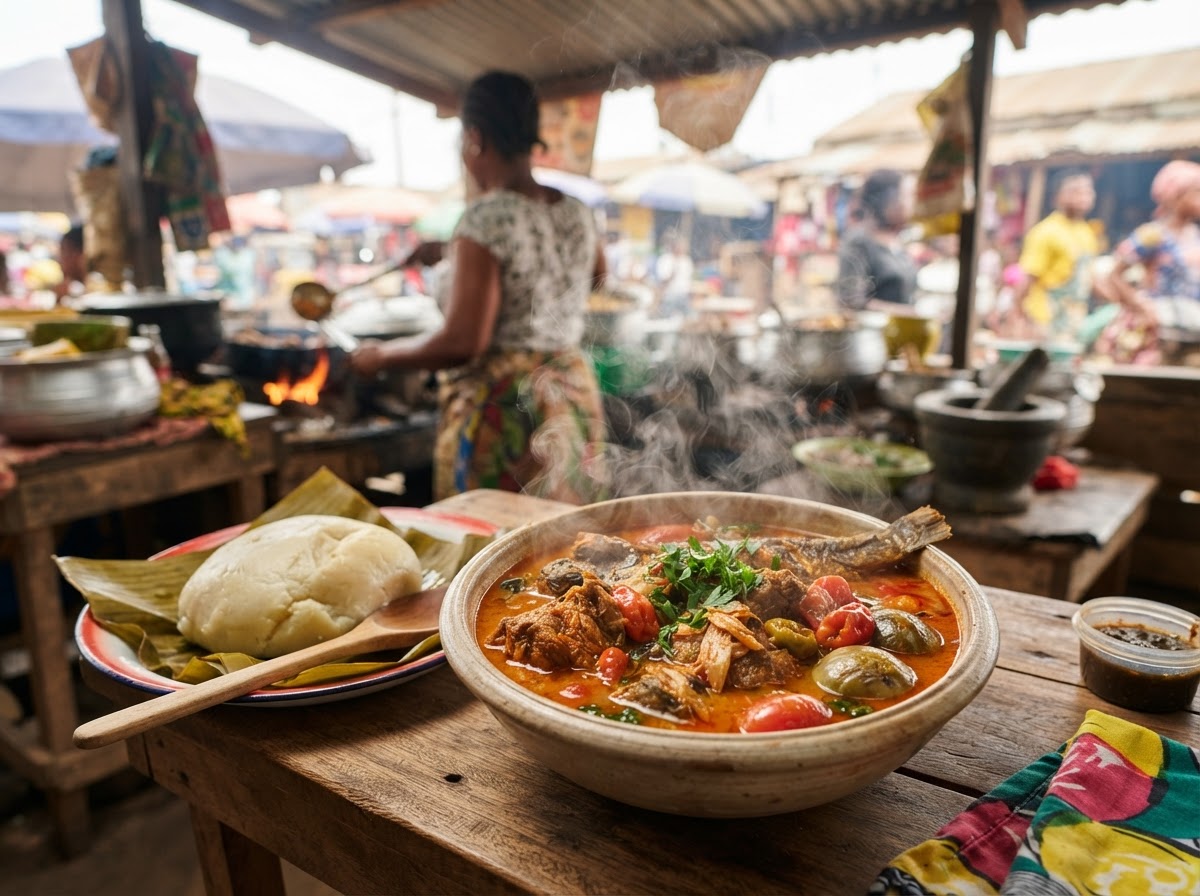
There is a moment — if you have ever sat beneath a neem tree in the Brong-Ahafo region, or squeezed onto a plastic stool at a chop bar somewhere between Kumasi and Accra — when Ghanaian food stops being just food and becomes something closer to philosophy. A bowl of light soup arrives, its surface shimmering with palm oil, the broth deepened by the umami funk of fermented locust beans. You tear a piece of fufu, smooth and elastic as warm clay, and you understand immediately that this cuisine has been thinking about comfort for a very, very long time. Traditional Ghanaian cuisine is not merely sustenance. It is memory, ceremony, identity, and geography, all stirred into the same pot.
At Khora, we have spent considerable time eating our way across Ghana's regions, speaking with home cooks, chop bar operators, and restaurant owners who are keeping old traditions alive while pushing them forward. What follows is our most comprehensive guide yet to the flavors, history, and rising global profile of one of West Africa's most extraordinary food cultures.
The Deep Roots: A History Written in Clay Pots
To understand traditional Ghanaian cuisine, you must first understand the land it grew from. Ghana sits at the intersection of savanna and rainforest, of coastline and harmattan-swept north, and the country's cooking reflects this ecological diversity with remarkable fidelity. Archaeological evidence suggests that agricultural communities in what is now Ghana were cultivating yams, sorghum, and millet as far back as 2000 BCE. The arrival of trade routes — both trans-Saharan and, later, transatlantic — introduced new ingredients like tomatoes, cassava, maize, and groundnuts that were so thoroughly absorbed into the local culinary vocabulary that today they feel ancient and autochthonous.
The great empires of the region — the Ghana Empire, the Ashanti Confederacy, the kingdoms of the north — each developed distinct court cuisines, ceremonial foods, and preservation techniques. The Ashanti, for instance, elevated fufu to near-sacred status, preparing it with the kind of rhythmic precision that made the pounding of yam into a communal performance. In the north, the Dagomba and Gonja peoples perfected the art of cooking with shea butter and dried fish, developing flavors that are earthy, smoky, and profoundly satisfying in ways that are entirely different from southern coastal cooking.
Colonialism introduced new disruptions, but it could not dislodge the deepest culinary instincts of the Ghanaian kitchen. If anything, the post-independence period saw a renewed pride in traditional foods, a pride that continues to grow today as chefs and food writers across the world discover what Ghanaian grandmothers have always known.
The Architecture of Flavor: Key Ingredients in Traditional Ghanaian Cuisine
Every great cuisine is built on a handful of foundational ingredients, the non-negotiables that give it its irreducible character. In Ghana, these are not subtle. They announce themselves boldly and without apology.
Palm Oil: Ghana's Liquid Gold
Nothing defines the flavor profile of traditional Ghanaian cuisine quite like red palm oil. Pressed from the fruit of the oil palm tree (Elaeis guineensis), this vivid orange-red oil is the cooking medium, the flavoring agent, and the visual signature of dozens of iconic dishes. Palm nut soup, palm oil stew, kontomire — all of them owe their soul to this single ingredient. Beyond its flavor, palm oil is a nutritional powerhouse, rich in beta-carotene and tocopherols, though its environmental footprint has become a subject of responsible conversation in recent years. Traditionally sourced, small-batch Ghanaian palm oil remains one of the great culinary treasures of West Africa.
Fermented Locust Beans (Dawadawa)
If palm oil is the heart of Ghanaian cooking, then dawadawa — the fermented seed of the African locust bean tree — is its soul. Small, dark, and intensely pungent, dawadawa is the Ghanaian equivalent of miso or aged parmesan: a concentrated umami bomb that lifts soups, stews, and sauces from the merely delicious to the genuinely complex. It is especially prevalent in northern Ghanaian cooking, where it appears in soups and sauces alongside shea butter and smoked catfish. For the uninitiated, the smell can be confronting. The taste, however, is always a revelation.
Smoked and Fermented Fish
Along Ghana's coast, fish — smoked herrings, salted tilapia, dried shrimp — perform a role similar to dawadawa in the north: they provide the savory backbone around which everything else is organized. A pot of groundnut soup without a piece of smoked fish is, by most Ghanaian standards, an incomplete thought.
The Starchy Trinity: Yam, Cassava, Plantain
The carbohydrate architecture of traditional Ghanaian cuisine rests on three pillars: yam, cassava, and plantain. Yam is pounded into fufu or boiled and served with kontomire stew. Cassava is fermented into agbelima (a sour dough used in banku), grated into kokonte, or processed into tapioca. Plantain is boiled, fried into kelewele (spiced with ginger and cayenne), or eaten ripe alongside beans and palm oil in the beloved street food combination known as red-red.
The Dishes: A Geography of the Ghanaian Table
To eat across Ghana is to travel through its regions without leaving the table. The country's culinary map is as diverse as its cultural one, and any honest survey of traditional Ghanaian cuisine must honor that diversity.
Fufu and Light Soup
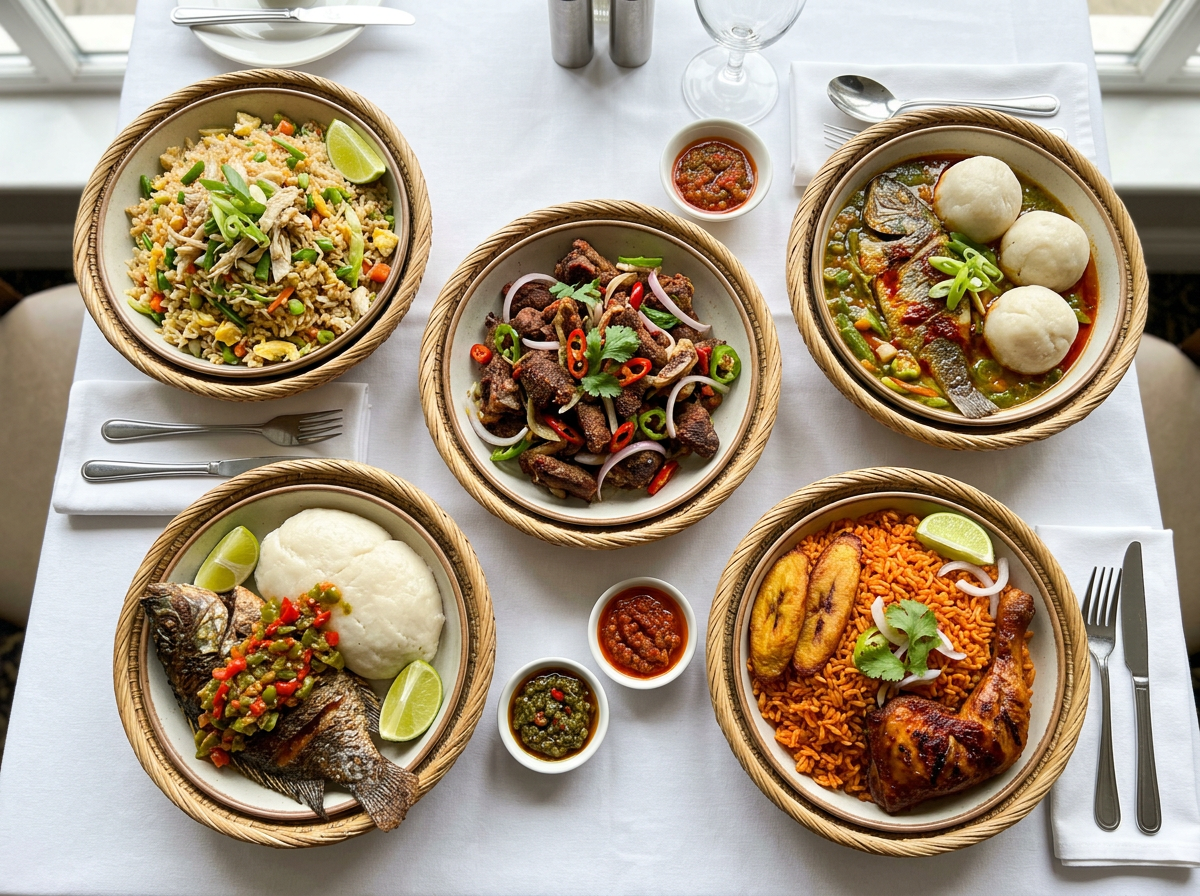
This is perhaps the most iconic pairing in all of Ghanaian food. Fufu — pounded yam, cassava, or plantain beaten to a smooth, elastic consistency — is served alongside a clear, intensely flavored broth known as light soup. Do not let the name mislead you. Light soup is "light" only in texture; in flavor, it is profound. Made with chicken, goat, or fresh fish, seasoned with tomatoes, peppers, ginger, and the essential contribution of garden eggs and dawadawa, it is the Ghanaian equivalent of a great French consommé: technically demanding, endlessly satisfying.
Banku and Tilapia
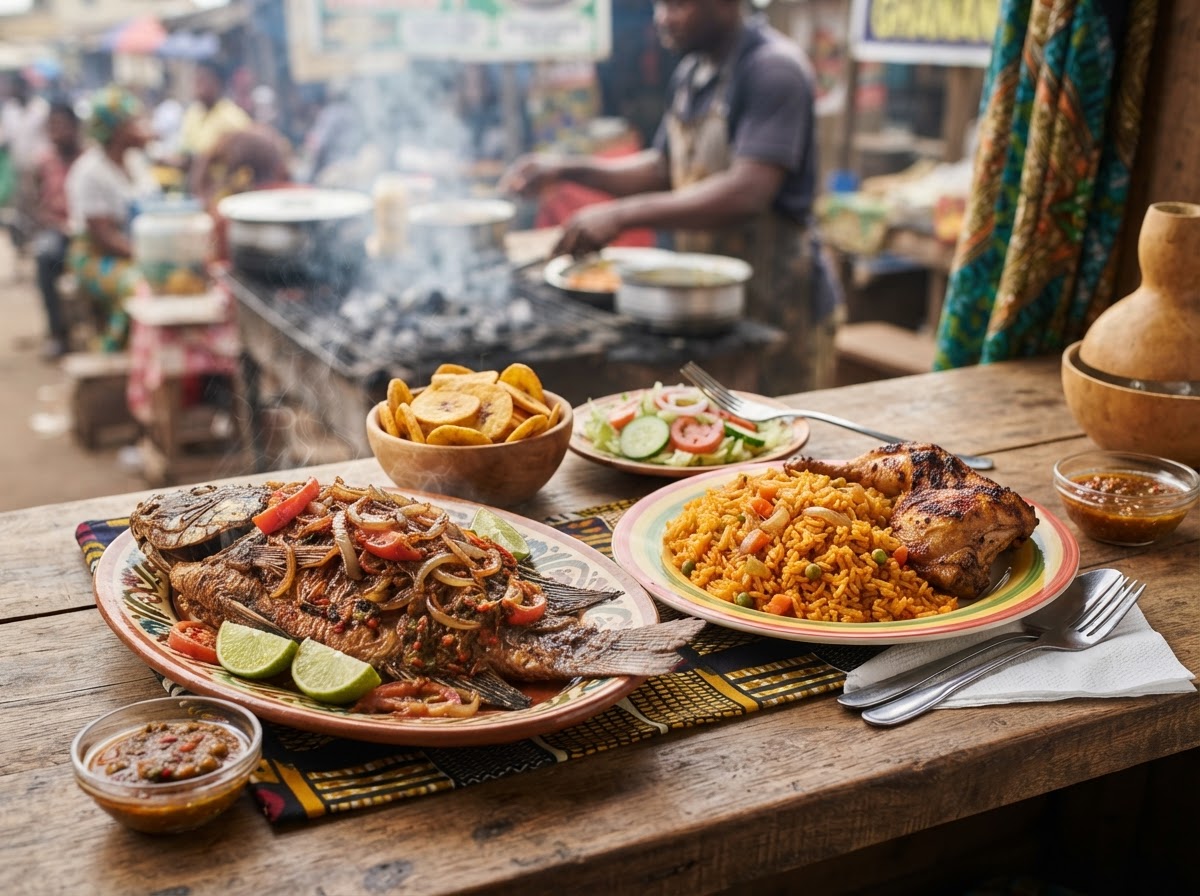
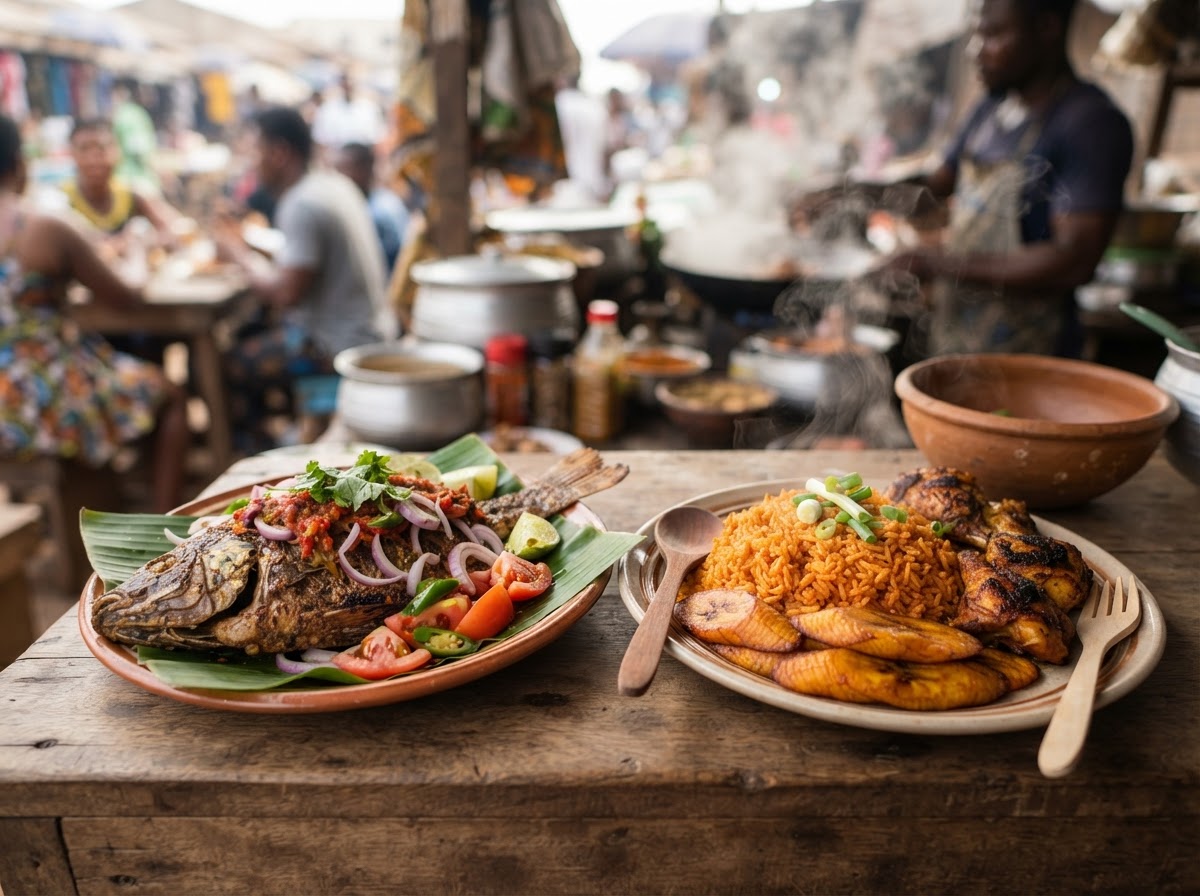
Along the coast, particularly among the Ga and Fante peoples, banku and grilled tilapia is the combination that stops conversations. Banku is a fermented corn and cassava dough, cooked into a smooth, slightly sour ball with a chewy, yielding texture. Paired with a whole tilapia rubbed with pepper and charcoal-grilled until the skin blisters and crisps, then served with a garden pepper sauce that bites back, this is coastal Ghanaian cooking at its most confident. The combination of sour, smoky, spicy, and fresh is a masterclass in flavor balance.
Groundnut Soup
Groundnut soup — made from blended, roasted peanuts cooked into a rich, terracotta-colored broth — is one of the great soups of the world. Full stop. It is comforting in the way that only dishes with centuries of refinement behind them can be. Served with fufu, rice, or boiled yam, with chicken, goat, or tripe, it is at once universally approachable and deeply, specifically Ghanaian.
Jollof Rice
No discussion of traditional Ghanaian cuisine is complete without addressing the jollof question. Ghana's jollof rice — cooked in a base of tomatoes, peppers, and onions, flavored with bay leaves, mixed spice, and shito — is a masterpiece of slow, attentive cooking. The best Ghanaian jollof develops a slightly smoky crust at the bottom of the pot, known locally as "party jollof," which is widely considered the highest culinary honor a rice dish can achieve. The ongoing West African jollof debate is best settled, we would suggest, at the table rather than on the internet.
Northern Specialties: TZ and Tuo Zaafi
In Ghana's Northern, Upper East, and Upper West regions, the staple starch changes dramatically. Tuo Zaafi (TZ) — a thick, smooth porridge made from millet or maize flour — is the north's answer to fufu, typically served with ayoyo soup, a mucilaginous, deeply nourishing green soup made from jute leaves and seasoned with dawadawa. This is food that is honest, warming, and utterly unlike anything you will find in the south. It is also, increasingly, a source of great regional pride.
Kelewele and Street Food Culture
Ghanaian street food deserves its own encyclopedia. Kelewele — ripe plantain cubed and fried in oil spiced with ginger, cayenne, anise, and sometimes cloves — is the perfect street snack: sweet, spicy, caramelized at the edges, soft at the center. Waakye (rice and beans cooked together with dried sorghum leaves that stain everything a gorgeous burgundy) is a full meal in a leaf-lined bowl. Bofrot (Ghanaian doughnuts), roasted plantain with groundnuts, and grilled corn rubbed with coconut are the flavors of everyday Ghanaian life, and they are extraordinary.
Regional Variations: One Country, Many Kitchens
One of the most important things to understand about traditional Ghanaian cuisine is that it is not monolithic. Ghana has over 80 ethnic groups, each with its own culinary traditions, preferred ingredients, and ceremonial foods.
- The Ashanti Region — Fufu culture reaches its apex here. Palm nut soup, abenkwan, is the Sunday dish of choice, and the quality of the pounding is a matter of genuine family pride.
- The Ga and Fante Coasts — Seafood dominates. Fante fante (fresh fish stew), kontomire with smoked fish, and banku-based meals reflect a deep intimacy with the Atlantic.
- The Volta Region — The Ewe people bring a distinct culinary identity, including akple (a smoother cousin of banku), fetri detsi (okra soup), and a sophisticated use of smoked and dried proteins.
- The Northern Regions — Millet, sorghum, shea butter, dawadawa, and smoked catfish define a cooking tradition that is ancient, austere, and deeply flavorful. Tuo Zaafi, zom koom (fermented millet porridge), and guinea fowl dishes speak to a landscape and a way of life quite different from the south.
- The Brong-Ahafo Region — A transitional zone between forest and savanna, producing some of Ghana's finest yams and a cuisine that blends both northern and southern sensibilities.
Ghana's Cuisine on the World Stage
The past decade has seen a significant and long-overdue reappraisal of West African food in the global culinary conversation. Restaurants featuring Ghanaian-inspired menus have opened in London, New York, Amsterdam, and Toronto. Chefs of Ghanaian descent — operating at the highest levels of the international food world — are drawing on the flavors of their heritage to create menus that are winning critical acclaim and, more importantly, changing the way non-African diners understand the depth and sophistication of the continent's food traditions.
Palm oil is being reconsidered by serious chefs as a flavor ingredient rather than merely a cooking fat. Dawadawa is appearing on tasting menus in Copenhagen and São Paulo. Fermented corn doughs are being discussed alongside kimchi and sourdough as examples of global fermentation wisdom. And jollof rice has, in the most pleasing possible twist, become the subject of genuine international enthusiasm rather than the punchline of a geographical debate.
"When you understand Ghanaian food, you understand that West Africa has been doing umami, fermentation, slow cooking, and flavor layering for thousands of years. We did not need the world to discover us — but we are happy the world is finally paying attention."
This rising global profile is not just good for Ghanaian chefs and food entrepreneurs. It is good for the ingredients, the farmers, the palm oil processors, the dawadawa traders, and the communities whose livelihoods depend on these ancient food systems being valued and sustained.
Editor's Recommendations: Where to Experience Traditional Ghanaian Cuisine
Ghana's restaurant scene is a wonderfully heterogeneous mix of local chop bars, upscale dining rooms, and everything in between. Our Khora database has surfaced some outstanding spots that are keeping the tradition alive while welcoming every kind of diner. Here are some of our top picks across the country:
Fufu Guy Guy — Eastern Region
The name is playful; the food is serious. Fufu Guy Guy in the Eastern Region has earned a perfect 5.0 rating from Khora users, and it is not hard to see why. This spot leans hard into Ghanaian and West African traditions with a menu that includes seafood options and vegetarian-friendly dishes — a rare and welcome combination. If you are looking for an authentic fufu experience in the Eastern Region, this is your place.
Abe Ase Food Joint — Techiman
Techiman is a market town that takes its food seriously, and Abe Ase Food Joint delivers accordingly. With a perfect 5.0 rating and a menu spanning Ghanaian, West African, Continental, and Grill & BBQ options, this is the kind of place where a business traveler and a local elder can both find exactly what they need. The Ghanaian classics here are the real draw — earthy, generous, and cooked with evident care.
Peace Joint — Yendi
In the Northern Region's Yendi, Peace Joint is doing something quietly remarkable: serving proper Ghanaian and Continental food at a consistently high standard in a town that sits at the heart of Dagomba cultural life. With a 5.0 rating and a warm bar-and-grill atmosphere, this is the perfect place to encounter northern Ghanaian hospitality alongside a great grilled dish after a long day on the road.
ALKIDOOR RESTAURANT — Yendi
Also in Yendi, ALKIDOOR RESTAURANT is a genuine destination. Its menu sweeps across Ghanaian, West African, Chinese, Lebanese, Continental, Seafood, and Grill & BBQ — a lineup that reflects the cosmopolitan reality of northern Ghanaian towns sitting on historic trade routes. The 5.0 rating speaks to consistency and quality. When you are this far north and eating this well, you feel the full breadth of Ghana's culinary story.
Ambassador Restaurant — Winneba
Winneba, a coastal fishing town with a rich cultural life, deserves a restaurant as accomplished as Ambassador Restaurant. This 5.0-rated spot covers everything from Ghanaian staples to Lebanese and Continental options, with seafood naturally front and center. The coastal location means the fish is fresh, the pepper sauces are serious, and the atmosphere carries that particular energy that port towns always seem to generate.
Pantry Restaurant — Wa
In the Upper West Region's capital, Pantry Restaurant is a welcome anchor for anyone exploring Ghana's northwest. Rated a perfect 5.0, with a menu that includes Ghanaian, Continental, Seafood, and Grill & BBQ options, this is a kitchen that understands its community and its geography. The Upper West is shea butter country and dawadawa country — if you are curious about the flavors of northern traditional Ghanaian cuisine, Wa is your gateway, and Pantry is your table.
Walewale Bakery — Walewale
A perfectly rated bakery in the North East Region, Walewale represents something essential about Ghanaian food culture: the everyday, the local, the unpretentious. Ghanaian baked goods — sweet bread, sugar bread, rock buns — are not as globally celebrated as the country's soups and stews, but they are deeply woven into daily life. Stop here on your way through the north and you will understand something important about how food works as community infrastructure.
Bottom Line: Why Traditional Ghanaian Cuisine Deserves Your Full Attention
Traditional Ghanaian cuisine is one of the world's great unsung food traditions — though "unsung" is a designation that feels increasingly outdated. The global food conversation is catching up to what anyone who has eaten in Ghana has always known: this is a cuisine of extraordinary depth, regional diversity, and philosophical coherence. It is built on ingredients that are ancient and techniques that are sophisticated, and it is sustained by a culture that takes the act of feeding people with real seriousness and real love.
From the palm-oil-rich soups of the Ashanti heartland to the millet porridges of the far north, from the grilled tilapia of the Fante coast to the kelewele vendors of Accra's evening streets, traditional Ghanaian cuisine offers something that the best food always offers: the feeling that someone, somewhere, thought very carefully about how to make you feel at home.
Whether you are a curious visitor eating your first bowl of groundnut soup, a Ghanaian diaspora member rediscovering the tastes of childhood, or a food professional waking up to the possibilities of dawadawa and palm oil in a modern kitchen, Ghana's food culture has something profound to offer you. The table is set. The fufu is pounded. All that remains is for you to pull up a stool and eat.
Explore Ghana's restaurants, discover new flavors, and plan your next great meal with Khora — Ghana's premier restaurant discovery platform.
Ready to explore?
Search and discover the restaurants mentioned in this guide on Khora.
Find Restaurants