Healthy Twists on Classic Ghanaian Dishes: A Complete Guide
This guide offers health-conscious eaters creative and healthier ways to enjoy traditional Ghanaian dishes like banku, jollof, and waakye. Experience local flavors while maintaining a balanced diet.
Healthy Twists on Classic Ghanaian Dishes: A Complete Guide
There is a certain kind of joy that comes from sitting down to a steaming plate of banku and okro stew, or a generous scoop of waakye ladled over with shito and spaghetti, or jollof rice cooked low and slow until every grain is burnished with tomato and spice. Ghanaian food is deeply soulful — it is community, memory, and identity pressed into every pot. But as more Ghanaians and food lovers across the world become increasingly conscious of what they eat, a quiet revolution is taking place in home kitchens and restaurants across Accra and beyond.
The question on every health-conscious eater's lips is not "Should I give up Ghanaian food?" — because the answer to that is an emphatic no — but rather, "How do I enjoy healthier Ghanaian staples without sacrificing the flavors I love?" The good news is that traditional Ghanaian cuisine already has a remarkable nutritional backbone. The challenge, more often than not, lies in the preparation methods and portion sizes that have evolved over time. With a few smart adjustments, your favorite local dishes can become some of the most wholesome meals on the continent.
This guide is your comprehensive companion to navigating healthier Ghanaian staples — from home cooking hacks to knowing where in Accra to find well-prepared, nutritious versions of the classics you grew up loving.
Why Ghanaian Food Is Already a Nutritional Powerhouse
Before we start making adjustments, let us appreciate what Ghanaian cuisine already gets right. The traditional diet is built on a foundation of whole grains, legumes, leafy vegetables, and fresh fish — ingredients that nutritionists around the world actively encourage. Fermented foods like kenkey and banku are rich in probiotics. Kontomire (cocoyam leaves) is loaded with iron and folate. Palm nut soup is high in Vitamin E and beta-carotene. Garden eggs are low in calories and packed with antioxidants.
The issue is rarely the ingredients themselves. It is the quantity of oil used, the reliance on processed seasonings high in sodium, the portion imbalance between starch and vegetables or protein, and the increasing use of refined versions of traditional staples that can chip away at the nutritional value of a meal. Address those elements, and you have a cuisine that competes with any so-called "superfood" diet in the world.
The Secret Weapons Already in Your Kitchen
- Fermented corn and cassava — the base of banku and kenkey — support gut health through natural probiotics.
- Dawadawa (locust beans), used as a fermented seasoning, is protein-rich and a natural flavor enhancer that reduces the need for excess salt.
- Tomatoes, peppers, and onions — the holy trinity of Ghanaian cooking — are bursting with vitamins C and A, and powerful antioxidants like lycopene.
- Leafy greens like kontomire, ayoyo, and nkontomire are nutritional goldmines that feature prominently in traditional recipes.
Banku: How to Make Ghana's Favourite Swallow Healthier
Banku is one of Ghana's most beloved staples — a smooth, slightly sour swallow made from fermented corn and cassava dough. It is filling, deeply satisfying, and pairs beautifully with everything from okro stew to grilled tilapia. For health-conscious eaters, the good news is that banku is already fermented, which gives it a lower glycemic index than many people assume.
Here is how to make your banku experience even healthier:
- Adjust your portions: A typical serving of banku in Ghana tends to be large. Consider reducing your banku serving by 30–40% and increasing the amount of stew, soup, or protein on your plate. This simple swap shifts the meal's nutritional profile dramatically.
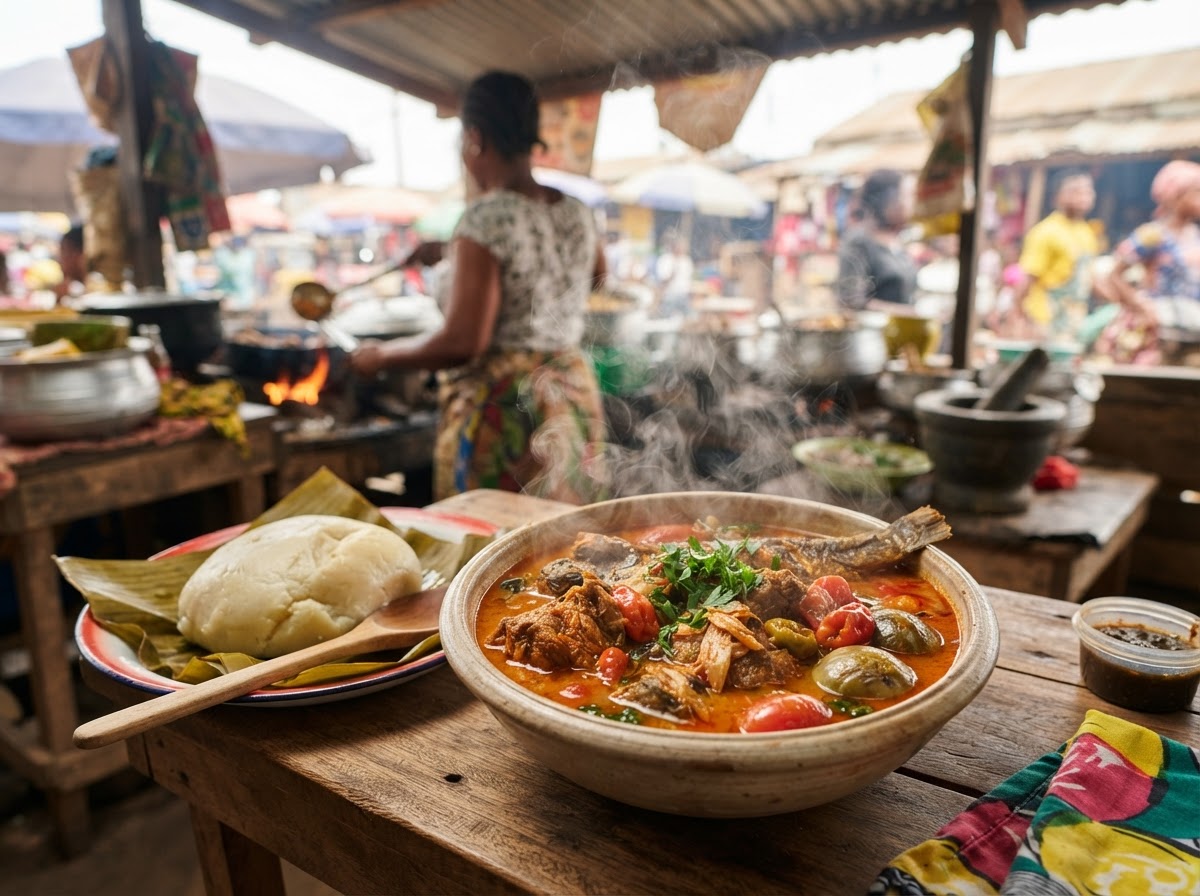
- Choose richer, vegetable-forward accompaniments: Okro stew made with minimal oil and loaded with fresh okra is an excellent pairing. Okra is high in fiber, which slows glucose absorption and complements the fermented starch well.
- Opt for grilled over fried proteins: Banku is frequently served with fried fish. Swapping fried tilapia for grilled tilapia, grilled chicken, or steamed crabs cuts saturated fat significantly while preserving all the flavor.
- Experiment with cassava-forward ratios: Increasing the proportion of cassava in your banku mix can result in a slightly softer texture with more resistant starch, which feeds beneficial gut bacteria.
Healthy Banku Pairing Ideas
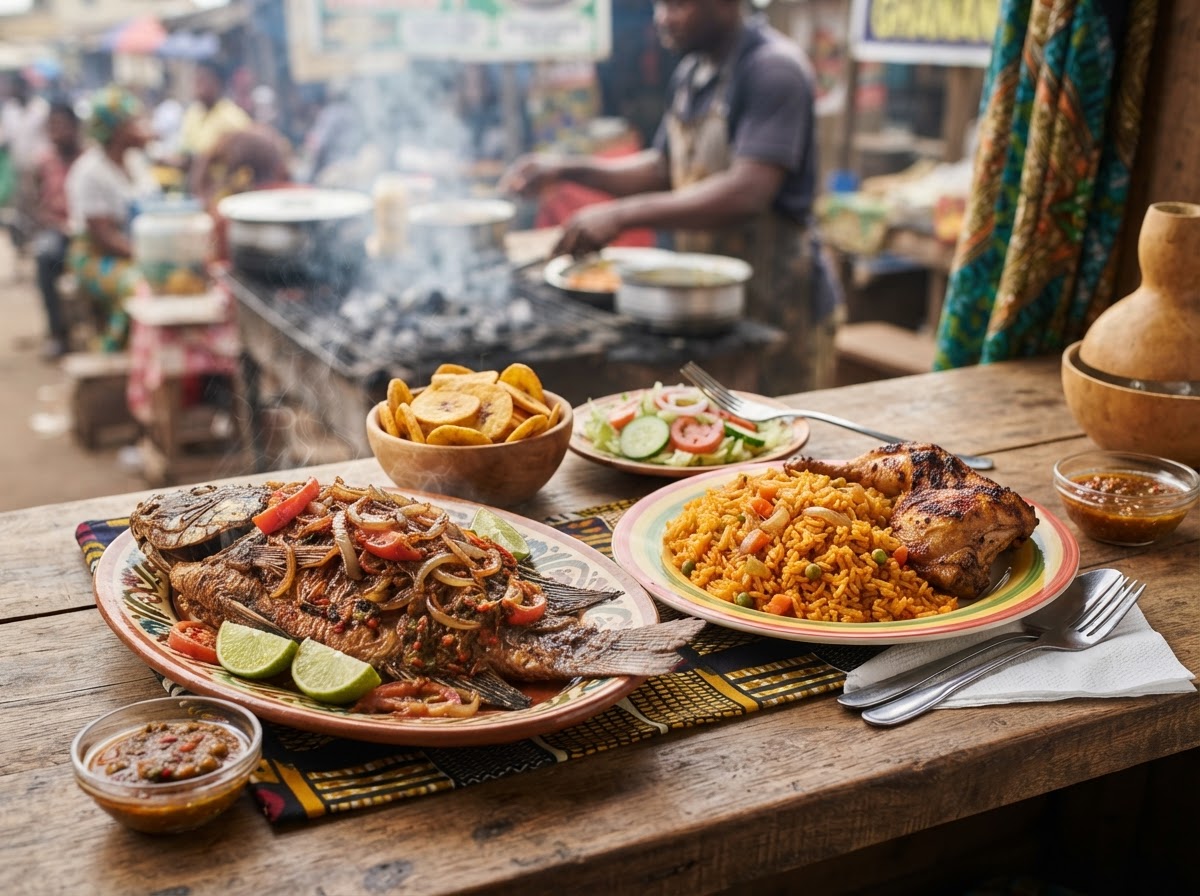
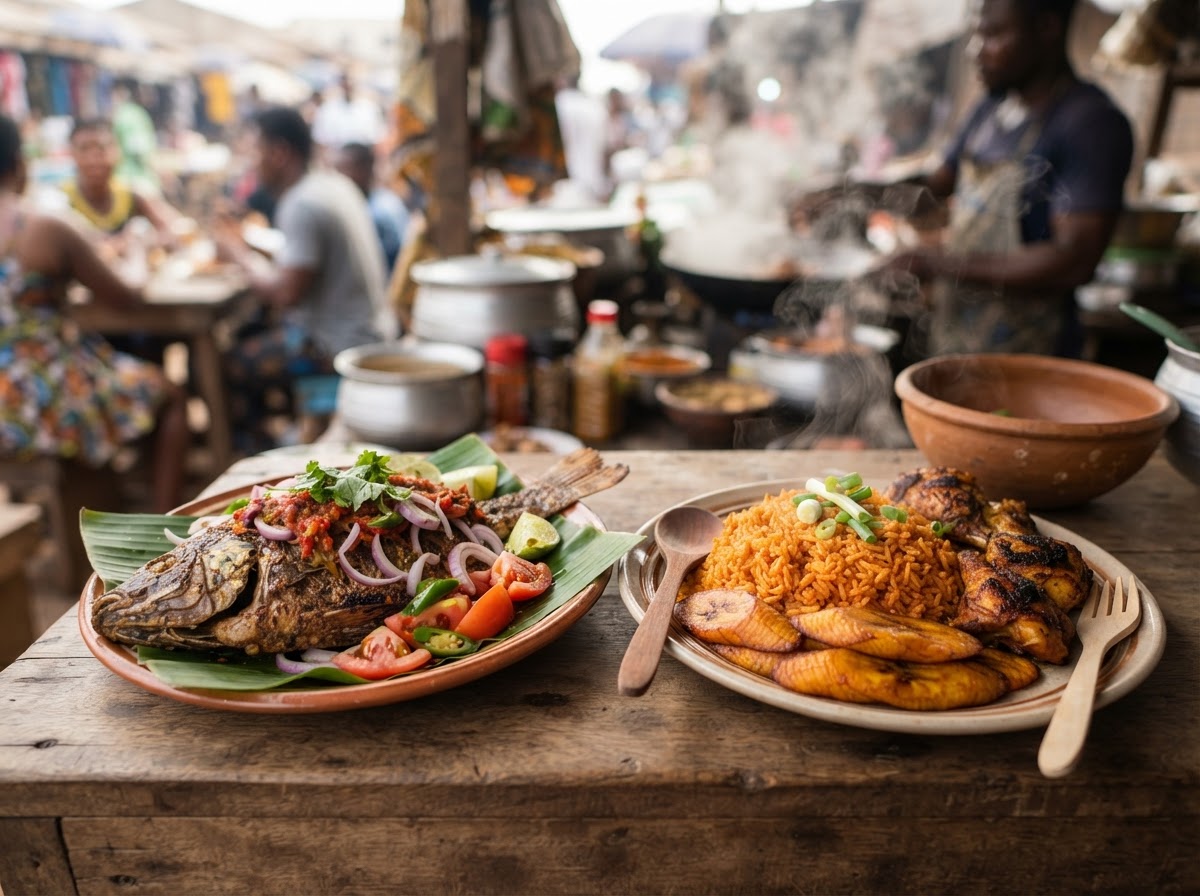
Think grilled whole tilapia with a fresh pepper sauce made from blended tomatoes, onions, and scotch bonnet with a drizzle of extra virgin palm oil (used sparingly). Add a side of kontomire stew cooked with low oil and seasoned with dawadawa instead of bouillon cubes. This is not a compromise — it is an upgrade.
Jollof Rice: The King Reimagined for the Health-Conscious Table
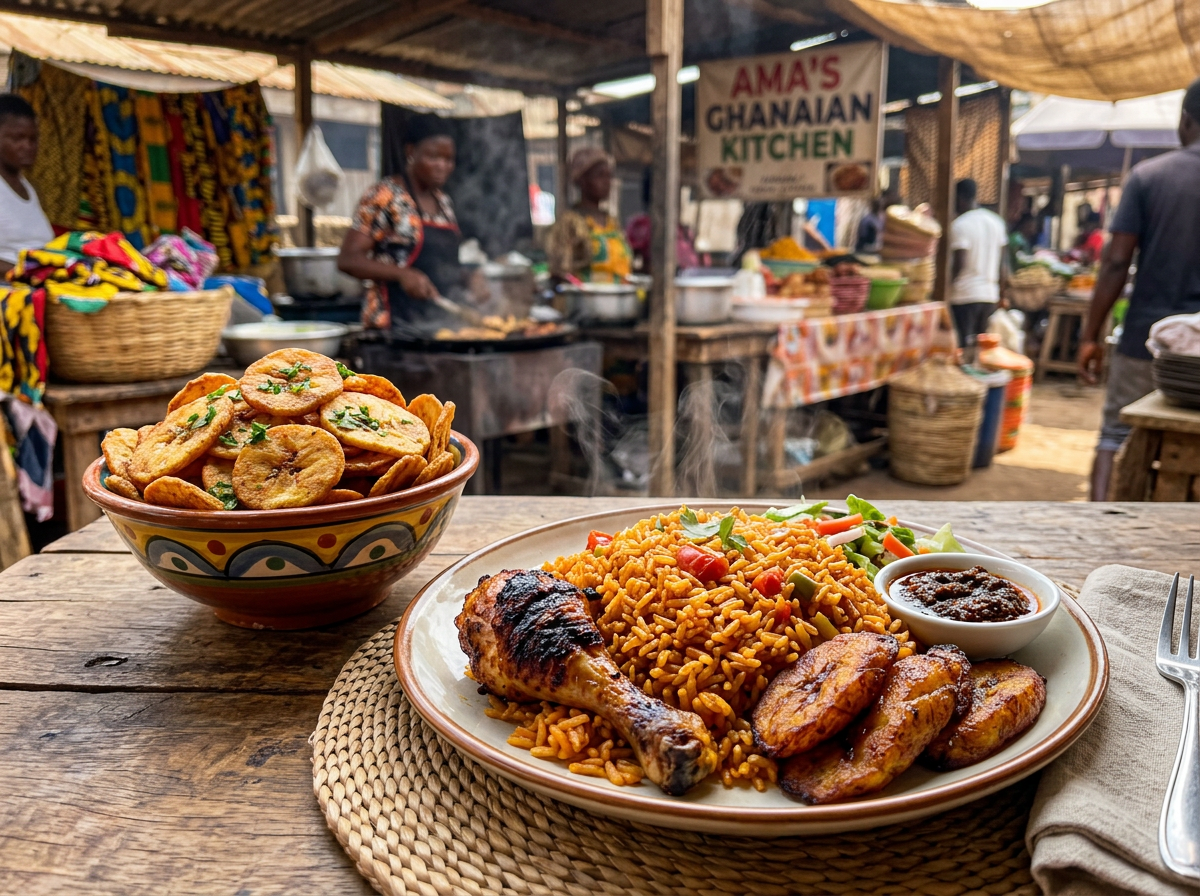
Let us be clear: Ghanaian jollof is non-negotiable. But there are genuine, delicious ways to make it work harder for your body. Traditional jollof is cooked in a base of blended tomatoes, peppers, onions, and palm oil or vegetable oil, with rice absorbing all those flavors. It is already more wholesome than many people credit — but here is how to take it further.
- Switch to brown rice or parboiled rice: Brown rice retains its bran layer, which means more fiber, more magnesium, and a lower glycemic response. It takes longer to cook, but the nutty flavor actually enhances jollof's smoky depth.
- Reduce the oil: Many jollof recipes call for a generous pour of oil. You can cut the quantity by half and compensate with a richer tomato base. The stew will still coat every grain beautifully.
- Load up on vegetables: Add diced carrots, green peas, bell peppers, and even spinach stirred in at the end. Not only do you boost the nutrient profile, you add color and texture that elevates the dish visually.
- Skip the bouillon cubes when possible: These are high in sodium. Use a homemade stock, or season with natural herbs, garlic, ginger, and dawadawa for depth of flavor without the sodium overload.
- Embrace the party jollof principle — but mindfully: The smoky base of great jollof (the bokoboko at the bottom of the pot) comes from low heat cooking, not excessive oil. Master the heat, and you get that party jollof magic without the guilt.
Jollof Rice with a Nutritional Boost
Try cooking your jollof with a base of bone broth or vegetable stock instead of water. Add a generous handful of kale or kontomire in the final five minutes of cooking. Serve with grilled chicken thighs seasoned with fresh ginger, garlic, and thyme — zero compromise on flavor, massive gain in nutrition.
Waakye: Ghana's Street Food Star Gets a Health Upgrade
Waakye — that glorious combination of rice and beans cooked together with dried sorghum leaves that give it its distinctive reddish-brown hue — is one of Ghana's most iconic street foods. It is also, quietly, one of the most nutritionally balanced staples in the Ghanaian diet. Beans are an excellent source of plant-based protein and fiber. The rice-bean combination creates a more complete amino acid profile than either grain alone.
The challenge with waakye as it is typically served lies in the accompaniments and extras: the stew is often heavy in oil, the spaghetti adds refined carbohydrates, and the shito, while delicious, can be sodium-heavy when made commercially.
- Build your waakye plate strategically: Skip the spaghetti or reduce it to a garnish. Double up on the beans-to-rice ratio for more protein and fiber. Ask for extra garden egg stew or egg.
- Choose your protein wisely: Waakye is often served with fried fish, boiled eggs, or beef. Opt for boiled eggs or grilled fish over fried options. A boiled egg adds clean protein with minimal added fat.
- Make your own shito: Homemade shito allows you to control the oil and salt content while keeping all the chili, ginger, and dried fish flavor intact. Reduce the oil by 40% and use a combination of fresh and smoked fish for complexity.
- Appreciate the sorghum: The dried sorghum leaves (wee in Hausa) that give waakye its color are rich in antioxidants and anti-inflammatory compounds. This is ancient nutritional wisdom baked right into the recipe.
Editor's Spotlight: Waakye Done Right
For lovers of expertly prepared waakye with thoughtful ingredients, Waakye WuraGh (Westlands) in Greater Accra comes highly rated and even offers vegetarian options — a rarity in the waakye world, and a welcome one for plant-based eaters who want to enjoy this classic without the meat-heavy accompaniments. With a perfect 5.0 rating on Khora, it is proof that the streets of Accra are already adapting to the health-conscious diner.
Kenkey, Banku's Cousin: Understanding the Fermented Advantage
Kenkey occupies a special place in Ghanaian culinary identity, especially among the Ga and Fante communities along the coast. Made from fermented white corn dough and cooked in corn husks or dried corn leaves, kenkey has a dense, slightly sour profile that pairs perfectly with fried fish, raw pepper sauce, and shito.
From a health perspective, kenkey shares banku's probiotic benefits and actually has a lower glycemic index than regular cooked corn due to the fermentation process. Studies have shown that fermented maize products produce a more gradual blood sugar response, making them a smarter carbohydrate choice for people managing blood sugar levels.
- Pair with raw pepper and tomato sauce: The fresh, uncooked pepper sauce (typically made with scotch bonnet, onions, and tomatoes) that accompanies kenkey is raw and vibrant — full of live enzymes and Vitamin C. This is already a health-forward pairing.
- Choose smaller portions with more fish: Kenkey is dense and filling. A half-kenkey with a large grilled or oven-baked whole fish is a complete, satisfying, and nutritionally rich meal.
- Explore the Fante kenkey option: Fante kenkey, made without the outer corn husk casing and with a lighter texture, is slightly easier to digest and works wonderfully with fresh vegetable sides.
Soups and Stews: Where the Real Nutritional Alchemy Happens
Perhaps the greatest nutritional opportunity in Ghanaian cooking lies not in the swallows themselves, but in the soups and stews that accompany them. Light soup, palm nut soup, groundnut soup, abunuabunu, and garden egg stew are where vegetables, proteins, and aromatics come together in a glorious, fragrant broth.
Reducing Oil Without Losing Depth
The most common adjustment recommended by nutritionists working with Ghanaian diets is to reduce cooking oil. Here are practical, flavor-preserving techniques:
- Sauté your tomato base first, then add protein: By building a thick, well-reduced tomato and onion base before adding oil, you rely on the natural sweetness and acidity of the tomatoes for flavor rather than on a large quantity of oil.
- Use palm oil in small quantities: Red palm oil is actually nutritionally valuable — it is rich in Vitamin E, carotenoids, and healthy fats. The key is using it as a flavor enhancer (one to two tablespoons) rather than a cooking medium.
- Finish with herbs: Fresh basil, scent leaves (efirin), or a squeeze of lime added at the end brightens the entire pot and reduces your urge to compensate with salt.
Light Soup: Already a Nutritional Champion
Ghanaian light soup — typically made with tomatoes, peppers, onions, and either chicken, goat meat, or fish in a thin, intensely flavored broth — is one of the most naturally healthy dishes in the repertoire. It is low in fat, high in protein, and the aromatics (ginger, garlic, onions) are proven anti-inflammatory agents. Eating more light soup is not a health compromise; it is a health decision.
Editor's Recommendations: Where to Eat Healthier Ghanaian Staples in Accra
Making healthier choices at home is one thing — but Accra's dining scene is rich and vibrant, and you deserve to eat well when you go out too. Here are some Khora-listed restaurants where quality ingredients and thoughtful preparation make the difference:
- Waakye WuraGh (Westlands), Greater Accra — A street food destination with a 5.0 rating that offers vegetarian-friendly waakye options. Perfect for plant-based diners and anyone wanting a clean, well-prepared version of this classic. The vegetarian tag here is significant — it signals a kitchen thinking consciously about ingredients.
- Foodmuse Kitchen — Stews & Soups, Adabraka — Rated 5.0 and specializing in Ghanaian stews, soups, and breakfast, with vegetarian options available. This is precisely the kind of kitchen where you can find slow-cooked, ingredient-forward Ghanaian cooking without shortcuts. Ideal for those seeking nourishing bowls of light soup or vegetable-rich stews.
- Next Door Beach Restaurant, Greater Accra — A gorgeous beachside setting serving Ghanaian and continental seafood. Fresh seafood is one of the most nutritionally optimal proteins you can choose, and eating grilled tilapia or fresh crab by the ocean is about as close to perfect as dining gets.
- Eno Ama Chop Bar, Nima — A beloved chop bar with a 5.0 rating, this is traditional Ghanaian cooking at its most authentic. Chop bars are where you find food cooked in the old style — fresh, seasonal, and prepared from scratch daily. Choosing a chop bar over a fast food option is itself a health-forward decision.
- Kenkey Stand Buffet, Greater Accra — For kenkey enthusiasts, a buffet format allows you to control exactly what goes on your plate. Pile on the grilled fish, go heavy on the raw pepper sauce, and let the kenkey be your wholesome fermented foundation.
- The Grill Bros GH, East Legon — Grilling is one of the healthiest cooking methods, and this East Legon spot leans hard into that expertise. Grilled proteins with minimal oil and maximum flavor make this a smart choice for the health-conscious diner who wants quality.
- Ginkell's Palm Wine Bar (Zen Garden Labone), Labone — Beyond the palm wine (which, taken fresh and unfermented, is surprisingly nutritious), this gastropub-style bar and grill in the leafy Labone neighborhood offers a more curated, quality-focused take on Ghanaian-inspired food in a beautiful outdoor setting.
Practical Tips for Cooking Healthier Ghanaian Staples at Home
The kitchen is where the most powerful changes happen. Here is a distilled set of principles for anyone wanting to cook healthier Ghanaian staples without turning their meals into something unrecognizable:
- Ferment more, fry less: Embrace the tradition of fermented foods. They are cheaper, more nutritious, and deeply connected to Ghanaian culinary heritage.
- Measure your oil: This single habit — using a measuring spoon rather than pouring freely — can reduce your oil consumption by 50% without any impact on flavor in most dishes.
- Eat more fish, less red meat: Ghana's coastline is a blessing. Fresh tilapia, tuna, mackerel, and crab are affordable, delicious, and vastly better for cardiovascular health than a heavy red meat diet.
- Use natural flavor builders: Ginger, garlic, onions, shallots, dawadawa, uziza leaves, and fresh herbs are all powerfully flavored and nutritionally valuable. They make bouillon cubes unnecessary.
- Rebalance your plate: The typical Ghanaian plate is starch-dominant. Aim for a plate that is one-quarter starch, one-quarter protein, and one-half vegetables and soup. You will feel full, energized, and nourished.
- Do not fear palm oil — respect it: Red palm oil is not the enemy. Industrial vegetable oils, often used in excess, are a greater concern. A tablespoon of palm oil in a pot of kontomire stew is both traditional and nutritionally sound.
- Drink fresh kenkey water: The liquid from fermented corn is probiotic-rich and a wonderful traditional health drink. Do not discard it.
"Ghanaian food has never needed to apologize for itself nutritionally. What it needs is to be prepared with the same care and intention that our grandmothers brought to every pot — fresh ingredients, natural seasonings, and the wisdom to know that balance is everything."
Bottom Line
The pursuit of healthier Ghanaian staples is not a rejection of tradition — it is a deepening of it. When you reach back to the original principles of Ghanaian cooking — fermentation, fresh produce, whole fish, natural seasonings, and balanced portions — you discover that the healthiest version of Ghanaian food is also, often, the most traditionally authentic version.
Banku with grilled tilapia and a light okro stew. Brown rice jollof loaded with vegetables and served with grilled chicken. A carefully assembled waakye plate heavy on beans and egg, light on spaghetti. Fresh light soup brimming with ginger and garlic. These are not diet foods — they are Ghanaian food, prepared with intention and love.
Accra's restaurant scene is rich with options for the health-conscious eater — from the vegetarian-friendly waakye at Waakye WuraGh in Westlands to the freshly made soups and stews at Foodmuse Kitchen in Adabraka, to the perfectly grilled proteins at The Grill Bros GH in East Legon and the seafood excellence at Next Door Beach Restaurant. The city is cooking thoughtfully, and the best kitchens are already doing the work.
So eat your banku. Enjoy your jollof. Celebrate your waakye. Just do it with a little more knowledge, a little more intention, and the deep confidence that Ghana's food traditions have always had your health in mind — long before the word "wellness" became fashionable.
Discover these restaurants and more on Khora — Ghana's home for finding the best local food experiences, one plate at a time.
Ready to explore?
Search and discover the restaurants mentioned in this guide on Khora.
Find Restaurants