Exploring Traditional Ghanaian Cuisine: History & Dishes
Ghanaian cuisine is a vibrant celebration of history and culture, showcasing a variety of staple dishes and unique ingredients. This deep dive into traditional recipes reveals the regional variations that make Ghanaian food a rising star worldwide.
Exploring Traditional Ghanaian Cuisine: History & Dishes
There is a moment — if you've ever sat beside a roadside chop bar in Accra, a steaming bowl of light soup in front of you, the air thick with the perfume of smoked fish and fermented locust beans — when you understand that traditional Ghanaian cuisine is not merely food. It is memory. It is geography. It is the living, breathing record of a people who have fed themselves, loved each other, and celebrated life through flavour for millennia. Ghana's food story is one of West Africa's most compelling, and the world is only beginning to pay attention.
At Khora, we believe that understanding what's on your plate begins long before the first bite. So let us take you deep into the roots, the rituals, and the remarkable regional diversity of Ghanaian food — from the fermented dawadawa of the north to the smoky tilapia of the Volta basin, from the iconic kenkey stalls of Accra to the pepper-laced soups of the Ashanti heartland.
A History Written in Flavour: The Origins of Ghanaian Food Culture
The history of traditional Ghanaian cuisine stretches back thousands of years, shaped by the rhythms of agriculture, trade, migration, and geography. Long before European contact, the peoples of present-day Ghana — the Akan, the Ga-Dangme, the Ewe, the Dagomba, and dozens of others — had already developed sophisticated culinary traditions rooted in what the land provided.
The forest belt of the south yielded yams, plantains, cocoyam, and an extraordinary abundance of palm fruit. The savannah north produced sorghum, millet, groundnuts, and shea. Coastal communities built their diets around fish — fresh, smoked, and dried — while inland peoples relied on bushmeat and freshwater sources. These were not simple subsistence diets; they were complex culinary ecosystems, each with their own fermentation techniques, spice blends, and cooking philosophies.
The transatlantic slave trade and subsequent colonial period introduced new ingredients — cassava, maize, and tomatoes arrived from the Americas — which Ghanaian cooks absorbed with characteristic ingenuity, folding them seamlessly into existing traditions. Today, cassava is the backbone of kenkey and gari; maize is ground into banku and tuo zaafi. Colonial disruption could not erase the food culture; it simply gave Ghanaian cooks more ingredients to work with.
"Ghanaian food is not about subtlety. It is about honesty — the honest heat of fresh pepper, the honest depth of fermented beans, the honest richness of palm oil. It demands your full attention." — A Ghanaian grandmother's philosophy, heard in kitchens across the country.
The Pillars of the Pantry: Key Ingredients That Define the Cuisine
To understand traditional Ghanaian cuisine, you must first understand its foundational ingredients. These are not mere components; they are the vocabulary of the kitchen, each one carrying its own cultural weight and culinary function.
Palm Oil: Ghana's Liquid Gold
No ingredient is more central to Ghanaian cooking than palm oil — the rich, reddish-orange oil pressed from the fruit of the oil palm tree (Elaeis guineensis). Its flavour is impossible to replicate or substitute: earthy, slightly smoky, and unmistakably West African. It is the base of palm nut soup, the finishing drizzle on kontomire stew, and the soul of red-red — Ghana's beloved black-eyed bean stew. Beyond flavour, palm oil is a nutritional powerhouse, rich in vitamins A and E, and carries profound cultural significance as a crop that has sustained communities across the forest zone for generations.
Fermented Locust Beans (Dawadawa / Iru)
If palm oil is the soul of southern Ghanaian cooking, fermented locust beans — known locally as dawadawa or ntore — are the umami heart of the north and of many traditional soups nationwide. Produced by fermenting the seeds of the African locust bean tree, dawadawa has a pungent, deeply savoury aroma that dissolves into soups and stews, adding a complexity that no manufactured seasoning cube can match. It is Ghana's answer to miso, to fish sauce — an ancient, artisanal flavour technology developed centuries before the word "umami" entered the global culinary dictionary.
Smoked and Dried Fish
The trinity of fresh, smoked, and dried fish underpins Ghanaian cooking from coast to savannah. Smoked herrings (koobi) and salted tilapia (momone) — both famously pungent — lend extraordinary depth to soups and stews. These preservation techniques were born of necessity but have become pillars of flavour identity. A light soup without koobi is technically possible. But is it Ghanaian? Ask any grandmother and she will give you a very firm answer.
The Holy Trinity of Aromatics: Pepper, Onion, and Tomato
Fresh scotch bonnet peppers, onions, and tomatoes form the aromatic base of the majority of Ghanaian stews and soups. Blended together and fried down in oil — a process that requires patience, a good pot, and the willingness to stand over heat — this base is the launching pad for everything from groundnut soup to garden egg stew. The degree of charring, the ratio of pepper to tomato, the moment the oil "comes to the top" — these are the micro-decisions that separate a good Ghanaian cook from a great one.
Staple Dishes: The Classics You Must Know
The canon of traditional Ghanaian cuisine is broad and regionally varied, but certain dishes have achieved national — and increasingly international — recognition. Here, we walk through the essential repertoire.
Jollof Rice
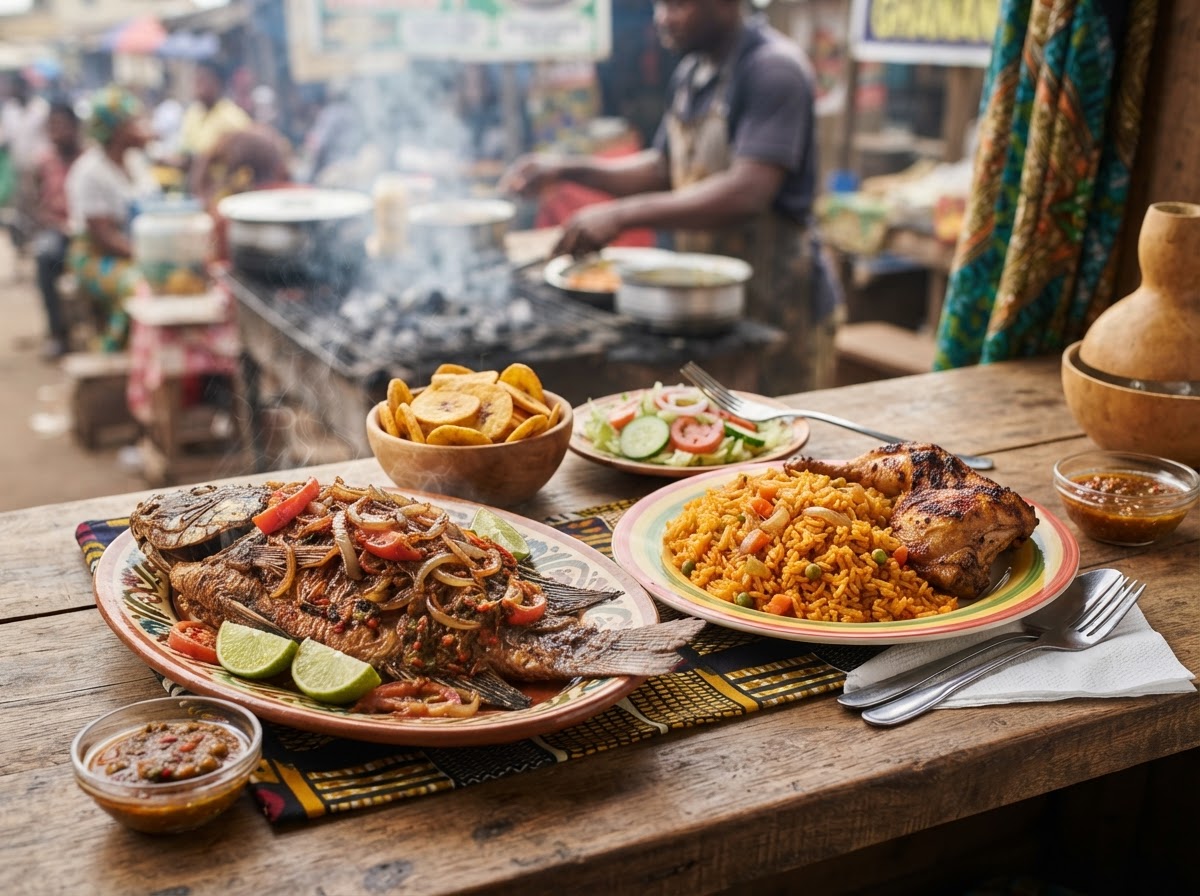
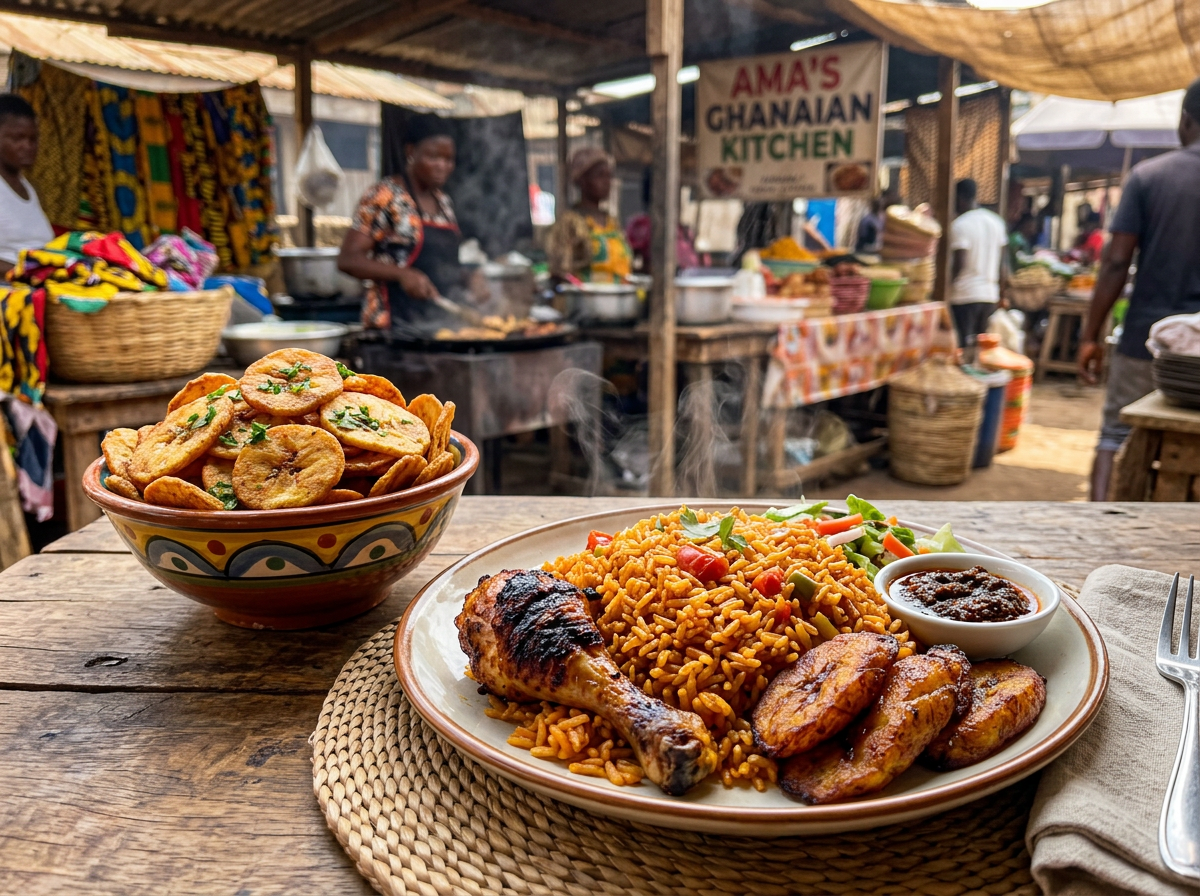
The dish that launched a thousand debates. Ghanaian jollof rice — cooked in seasoned tomato-based stock, often over wood fire for that prized smoky bottom layer called "party jollof" — is a source of fierce national pride. The Jollof Wars between Ghana, Nigeria, and Senegal may be partly tongue-in-cheek, but the passion is real. What distinguishes the Ghanaian version? A slightly firmer grain, the occasional addition of bay leaves and thyme, and that intoxicating smokiness that is near impossible to achieve on a gas cooker. Served with chicken, beef, or fish, it is the centrepiece of every celebration from naming ceremonies to funerals.
Banku and Tilapia
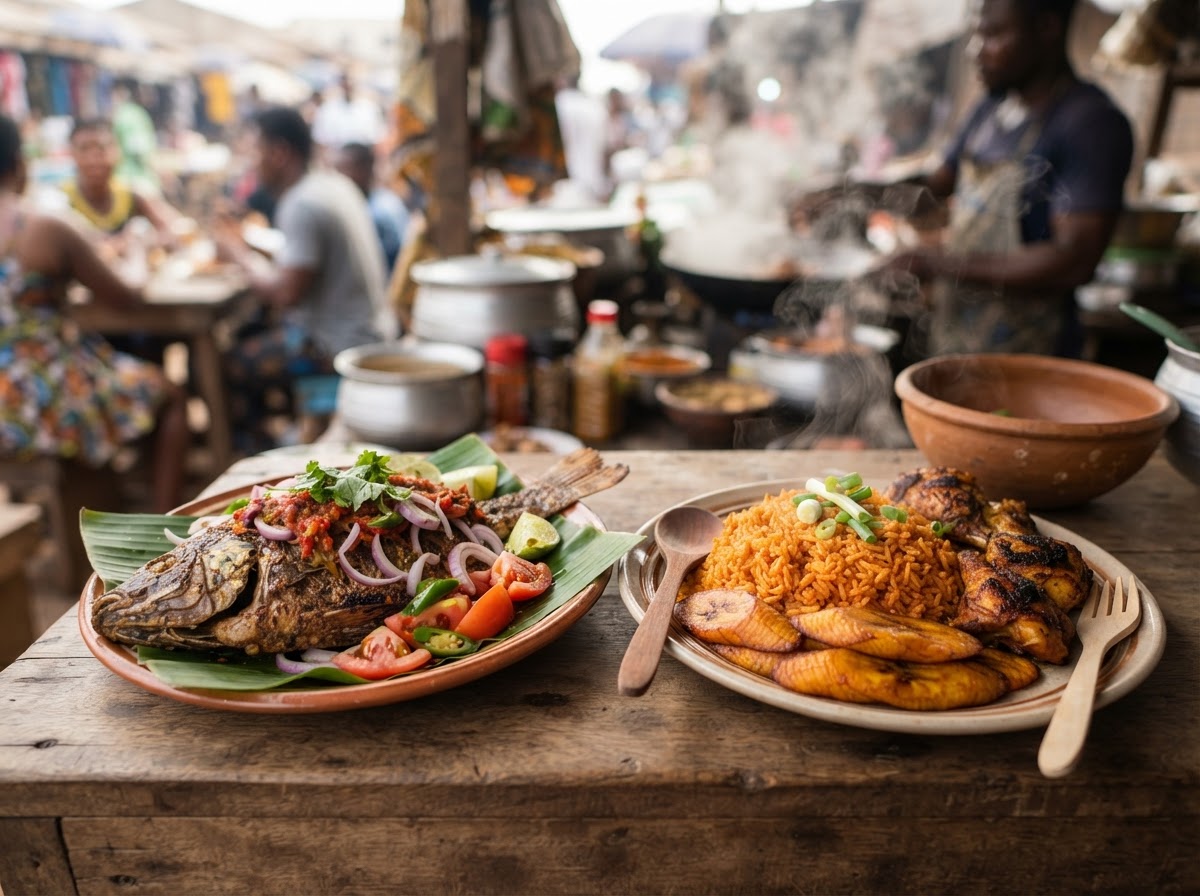
Banku is a fermented corn and cassava dough, cooked by stirring vigorously over heat until it reaches a smooth, elastic consistency. Paired with whole grilled tilapia — rubbed with spices, charred over open flame — and a fiery pepper sauce known as shito or fresh pepper mix, this combination is arguably Ghana's most iconic meal. It is eaten with the right hand, a ball of banku pinched and dipped, and it is the kind of food that collapses social boundaries: presidents eat it, students eat it, market traders eat it.
Kenkey
A close cousin of banku, kenkey is also made from fermented cornmeal, but is wrapped in corn husks or banana leaves and steamed, giving it a distinctive sour flavour and denser texture. There are two main varieties: Ga kenkey (from the Ga people of Greater Accra) and Fante kenkey (from the coast). Both are served with fried fish and pepper sauce, and both inspire intense regional loyalty. The kenkey stall is a democratic institution — a place where the city pauses, unwraps its dinner, and eats together.
Waakye
Waakye (pronounced "waa-chay") is rice and beans cooked together with dried sorghum leaves, which give the dish its distinctive reddish-purple colour. Originally from northern Ghana, it has conquered the entire country and now feeds Accra every morning from street stalls that open before dawn. The magic of waakye lies in the toppings: spaghetti, gari (dried cassava granules), shito, boiled eggs, stew, fried plantain, and salad can all pile onto a single plate in what amounts to a complete, multi-textured, multi-flavoured meal for a few cedis.
Groundnut Soup (Nkate Nkwan)
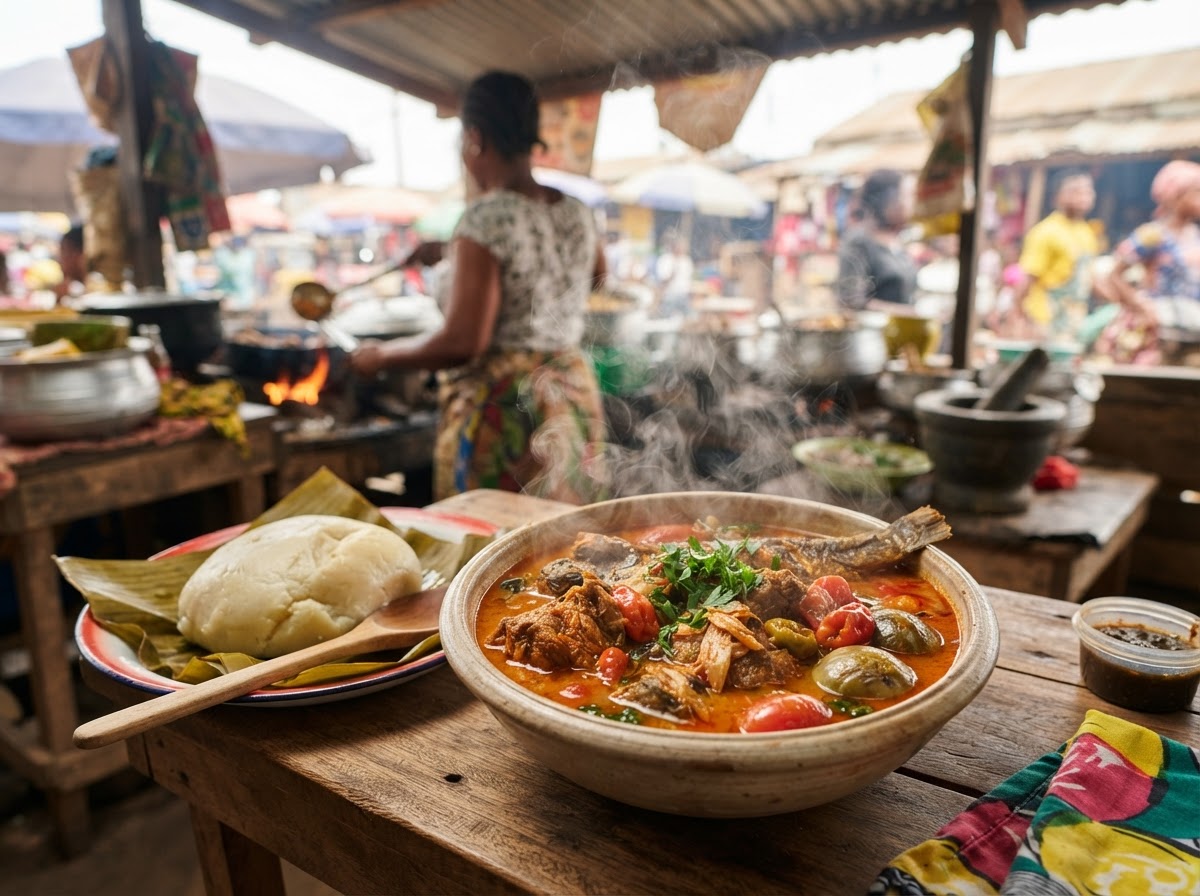
Rich, thick, and deeply complex, groundnut soup is one of Ghana's great culinary achievements. Made from roasted and ground peanuts, blended with tomatoes, onions, and pepper, and simmered with meat or fish, it is ladled over fufu — pounded cassava and plantain — in a ritual of eating that is both intimate and communal. Fufu is eaten slowly, reverently, the smooth dough swallowed rather than chewed, carrying mouthfuls of soup with it. It is not fast food. It is the opposite of fast food. It is food that asks you to be present.
Kontomire Stew (Palava Sauce)
Made from cocoyam leaves (kontomire), palm oil, smoked fish, and egusi (melon seeds), kontomire stew is deeply nourishing and represents the green-vegetable heart of Ghanaian cooking. Often eaten with boiled yam, plantain, or rice, it is everyday food — humble, honest, and extraordinarily nutritious.
Regional Variations: Ghana Is Not One Kitchen
One of the great misunderstandings of traditional Ghanaian cuisine is treating it as monolithic. Ghana is a country of extraordinary ethnic and ecological diversity, and its food reflects that complexity in beautiful ways.
The North: Tuo Zaafi and the Shea Butter Kitchen
In Ghana's Northern, Upper East, and Upper West regions, the staple carbohydrate shifts from cassava and corn to millet and sorghum. Tuo zaafi — a smooth, sticky millet or sorghum dough — is served with ayoyo soup, a distinctive green soup made from jute leaves that has a slightly mucilaginous texture and a clean, herbal flavour. Shea butter, extracted from the nuts of the shea tree, replaces palm oil as the dominant cooking fat in many northern preparations, lending a milder, nuttier quality to dishes. Dawadawa features prominently, as do dried baobab leaves used as a thickening agent in soups.
The Volta Region: The Breadbasket and the River Kitchen
The Volta Region — home to the Ewe people and the great Volta Lake — is a place of freshwater abundance. Tilapia, catfish, and crayfish feature heavily in the local diet. The Ewe tradition of akple — a fermented corn dough similar to banku but with its own distinct preparation — served with fetri detsi (okra soup) represents a proud culinary heritage with its own vocabulary and rituals.
The Coast: Ga Food and the Fisherman's Table
The Ga people of Greater Accra have gifted Ghana with kenkey, with the smoked fish culture, and with a coastal cuisine that is as tied to the Atlantic Ocean as any Mediterranean tradition. Fresh crab, lobster, and the beloved grilled whole fish served with fried plantain and pepper sauce are coastal staples that feel simultaneously ancient and perfectly of-the-moment.
Ashanti Region: The Fufu Heartland
The Ashanti region, centred on Kumasi, is the spiritual home of fufu. Here, the pounding of fufu — cassava and plantain beaten in a wooden mortar until silky smooth — is an art form, a test of strength, and a communal activity. Light soup (nkrakra) and palm nut soup (abenkwan) are the essential companions, and the quality of both is taken very seriously indeed.
The Rise of Ghanaian Cuisine on the Global Stage
For decades, West African food occupied a frustrating blind spot in the global food conversation — celebrated by those who knew it, largely invisible to those who didn't. That is changing rapidly, and traditional Ghanaian cuisine is at the forefront of the shift.
Diaspora chefs in London, New York, Toronto, and Amsterdam are bringing Ghanaian flavours to fine dining contexts without apology or compromise. Restaurants like Akoko in London and Tatale in New York have demonstrated that Ghanaian cooking possesses the depth, the complexity, and the cultural richness to stand alongside any of the world's great food traditions. Food writers at the New York Times, Bon Appétit, and the Guardian have dedicated significant ink to palm oil, fufu, and jollof rice in recent years — and the interest shows no sign of waning.
In Ghana itself, a new generation of chefs and food entrepreneurs is reexamining the canon — not to "elevate" it in the condescending sense, but to understand it more deeply, to honour its techniques, and to present it with the confidence it has always deserved. The conversation about fermentation, provenance, and indigenous ingredients that dominates global food discourse is one that Ghanaian food has been living — not just talking about — for centuries.
Dawadawa is a fermented product with microbial complexity that rivals kombucha. Kenkey is a naturally fermented carbohydrate with genuine probiotic potential. Palm oil, once demonised by Western nutritionists, is being rehabilitated as a nutritious, sustainable fat when produced responsibly. The world is catching up to what Ghanaian grandmothers have always known.
Editor's Recommendations: Where to Experience Traditional Ghanaian Cuisine in Accra
Knowing the history is one thing. Tasting it is another. Accra's food scene is one of the most exciting in West Africa right now — a dynamic mix of street-side tradition and contemporary ambition. Here are Khora's top picks for experiencing authentic Ghanaian food culture in the city, all carrying perfect five-star ratings from our community of food lovers.
- Waakye WuraGh (Westlands), Greater Accra — The name means "Waakye Queen," and the title is earned. If there is a more devoted temple to Ghana's greatest breakfast-and-beyond dish anywhere in the city, we have not found it. The full waakye spread here — with spaghetti, gari, boiled egg, stew, and the essential shito — is a masterclass in how much pleasure a modest budget can buy. Vegetarian-friendly and unapologetically Ghanaian. Street Food | Rating: 5.0
- Kenkey Stand Buffet, Greater Accra — A devoted celebration of Ghana's great fermented corn dish in all its forms. The buffet format means you can explore the full range of accompaniments — fried fish, pepper sauces, fried plantain — and understand how kenkey anchors a whole ecology of flavour around itself. Essential eating. Buffet | Rating: 5.0
- Eno Ama Chop Bar, Nima — The chop bar is the beating heart of Ghanaian food culture: unpretentious, communal, and unfailingly delicious when done right. Eno Ama, nestled in the vibrant Nima neighbourhood, represents the chop bar tradition at its finest. Expect home-style soups, stews, and grills that taste like someone's mother made them — because, in essence, someone's mother did. Chop Bar | Rating: 5.0
- Foodmuse Kitchen, Adabraka — Stews, soups, breakfast, and catering from a kitchen that takes Ghanaian home cooking seriously. The vegetarian options here demonstrate how inherently plant-forward much of traditional Ghanaian cooking actually is when you strip back the added proteins. Street Food | Rating: 5.0
- Ginkell's Palm Wine Bar (Zen Garden Labone), Labone — You cannot discuss traditional Ghanaian food culture without discussing palm wine — the gently fermented sap of the oil palm tree, milky, slightly effervescent, and consumed across the country at celebrations and everyday moments alike. Ginkell's makes palm wine the star of the show in a beautiful garden setting, pairing it with Ghanaian and West African food in a way that feels both rooted and refreshingly contemporary. Bar & Grill | Rating: 5.0
- Next Door Beach Restaurant, Greater Accra — For the full coastal Ghanaian experience — fresh seafood, grilled fish, the sound of the Atlantic in the background — this is the destination. The combination of Ghanaian and West African staples with fresh-from-the-ocean seafood recalls the deep tradition of coastal cooking that has fed Accra's communities for generations. Street Food | Rating: 5.0
- Pera Beach Club, La (Labadi) — Set against the dramatic backdrop of Labadi Beach, Pera brings together Ghanaian, West African, and international flavours in a setting that captures the cosmopolitan confidence of modern Accra. The seafood and grill offerings connect directly to the long tradition of beach-side cooking that defines La's food culture. Street Food | Rating: 5.0
Bottom Line: Why Traditional Ghanaian Cuisine Deserves Its Moment
Traditional Ghanaian cuisine has never needed validation. It has fed and sustained and delighted millions of people across centuries, across migrations, across colonial disruption and postcolonial reinvention. It arrived fully formed, philosophically coherent, and extraordinarily delicious — long before the global food media decided to take notice.
But the notice matters, because it creates the conditions for Ghanaian food to travel, to inspire, and to influence the way the world thinks about fermentation, about plant-based eating, about the umami depth of traditional preservation techniques, and about the profound relationship between food and cultural identity. When a young chef in London makes dawadawa butter and spreads it on sourdough, or when a food scientist in New York writes her doctoral thesis on the probiotic potential of kenkey, they are participating — however indirectly — in a food tradition that stretches back to the forests and savannahs of West Africa.
For those of us fortunate enough to be in Ghana, the invitation is simpler and more immediate: find a chop bar, order the fufu, let the light soup burn your lips pleasantly, eat with your hands, and understand — really understand — that you are participating in something ancient, living, and irreplaceable.
Accra's food scene, captured and curated on Khora, makes this exploration easier than ever. From the beloved waakye queens of the streets to the palm wine gardens of Labone, from the beach grills of Labadi to the neighbourhood chop bars of Nima — the full, magnificent spectrum of Ghanaian food culture is waiting. Pull up a chair. The soup is hot.
Ready to explore?
Search and discover the restaurants mentioned in this guide on Khora.
Find Restaurants