The Difference Between Waakye and Jollof: A Ghanaian Food Guide (2026)
Waakye and jollof are two of Ghana's most beloved rice dishes — but they're different. Here's a complete guide to their origins, ingredients, flavors, and where to find the best.
Waakye vs Jollof: What's the Difference?
If you're new to Ghanaian food — or even if you've been eating it for years — the difference between waakye and jollof rice can be confusing. Both are rice dishes, both are served with a rich tomato-based sauce, both are staples of the Ghanaian diet, and both are beloved. But they are different dishes, with different origins, different techniques, and different flavors. Understanding the difference will make you a more informed eater, a better orderer, and a more appreciative diner.
In short: waakye is rice and beans cooked together with sorghum leaves, which give it a signature reddish-brown color and an earthy, slightly savory flavor. Jollof rice is rice cooked in a rich tomato and pepper sauce, with a deep red color and a smoky, savory flavor. Waakye is about the combination of rice and beans; jollof is about the rice absorbing the sauce. Both are delicious, both are foundational, and both are worth understanding.
This guide will walk you through everything you need to know about waakye and jollof — their origins, their ingredients, their techniques, their flavors, and how to order them like a local. Whether you're a visitor trying to understand Ghanaian cuisine or a Ghanaian who wants to appreciate these dishes more deeply, this is your guide.
Waakye: The Rice and Beans Dish
Waakye (pronounced "wah-chay") is one of the oldest and most traditional dishes in Ghana. The name comes from the Hausa language — "wa" means rice and "kaye" means beans — and the dish is exactly that: rice and beans cooked together in the same pot. The beans are typically black-eyed peas, and the rice is typically long-grain white rice. The two are cooked together with sorghum leaves (called "waakye leaves" or "sorghum leaves"), which give the dish its signature reddish-brown color and an earthy, slightly savory flavor.
The technique is simple but requires patience. The beans are soaked, then cooked partway. The rice is added, along with the sorghum leaves, and the pot is covered and simmered until both the rice and the beans are fully cooked. The sorghum leaves infuse the dish with color and flavor, and the result is a one-pot meal that's both filling and nutritious — the beans provide protein, the rice provides carbohydrates, and the leaves provide vitamins and minerals.
Waakye is traditionally served with a stew or sauce on top — most often a rich tomato stew, but also shito (the dark, spicy Ghanaian condiment), gari (fried cassava granules), spaghetti, boiled eggs, and a protein — grilled chicken, fried fish, or beef. The accompaniments are what make waakye a full meal, and the combination — the earthy rice and beans, the rich stew, the spicy shito, the crunchy gari — is one of the most satisfying flavor and texture experiences in Ghanaian cooking.
Jollof Rice: The Rice in Sauce Dish
Jollof rice is one of the most famous dishes in all of West Africa, and Ghanaian jollof is among the best versions. The dish has its origins in the Jollof Empire, a historic West African state, and it has spread across the region — Nigeria, Senegal, Guinea, Sierra Leone, and Ghana all have their versions. The Ghanaian version is characterized by a deep red color, a smoky flavor, and a slightly firm texture — the rice is cooked in the sauce, not separately.
The technique is more complex than waakye. The sauce is made first — tomatoes, peppers, onions, and spices are blended and cooked down into a rich, thick base. The rice is then added to the sauce, along with broth or water, and the pot is covered and simmered until the rice absorbs the sauce and is fully cooked. The result is a rice dish that's deeply flavored — every grain of rice carries the taste of the sauce.
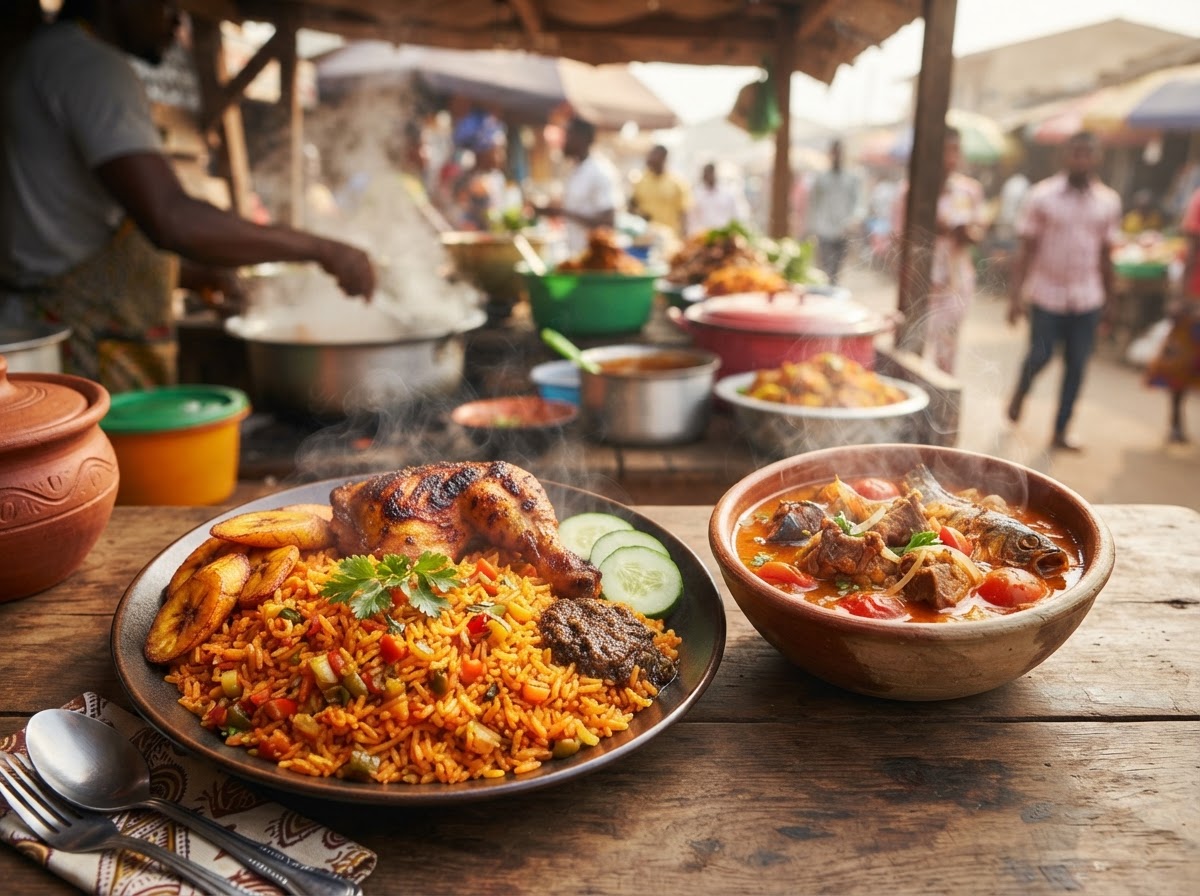
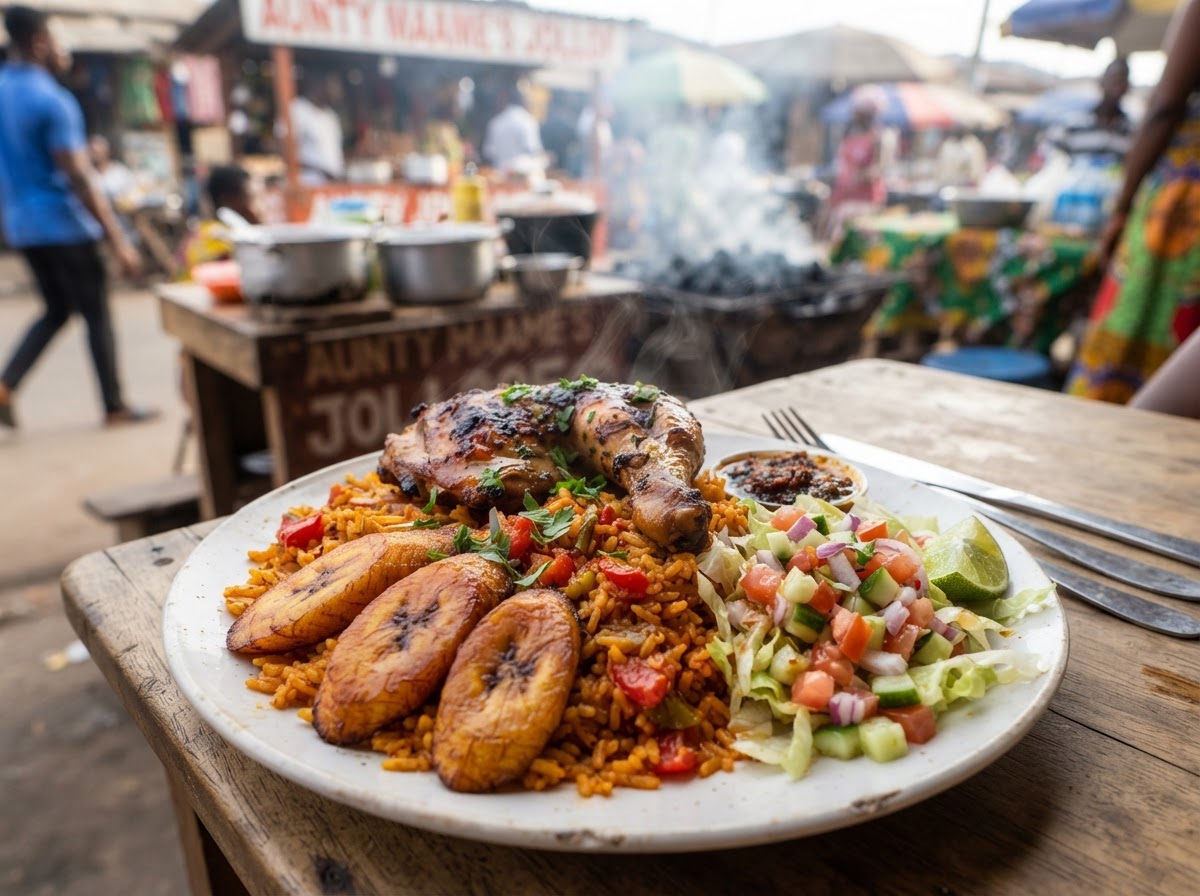
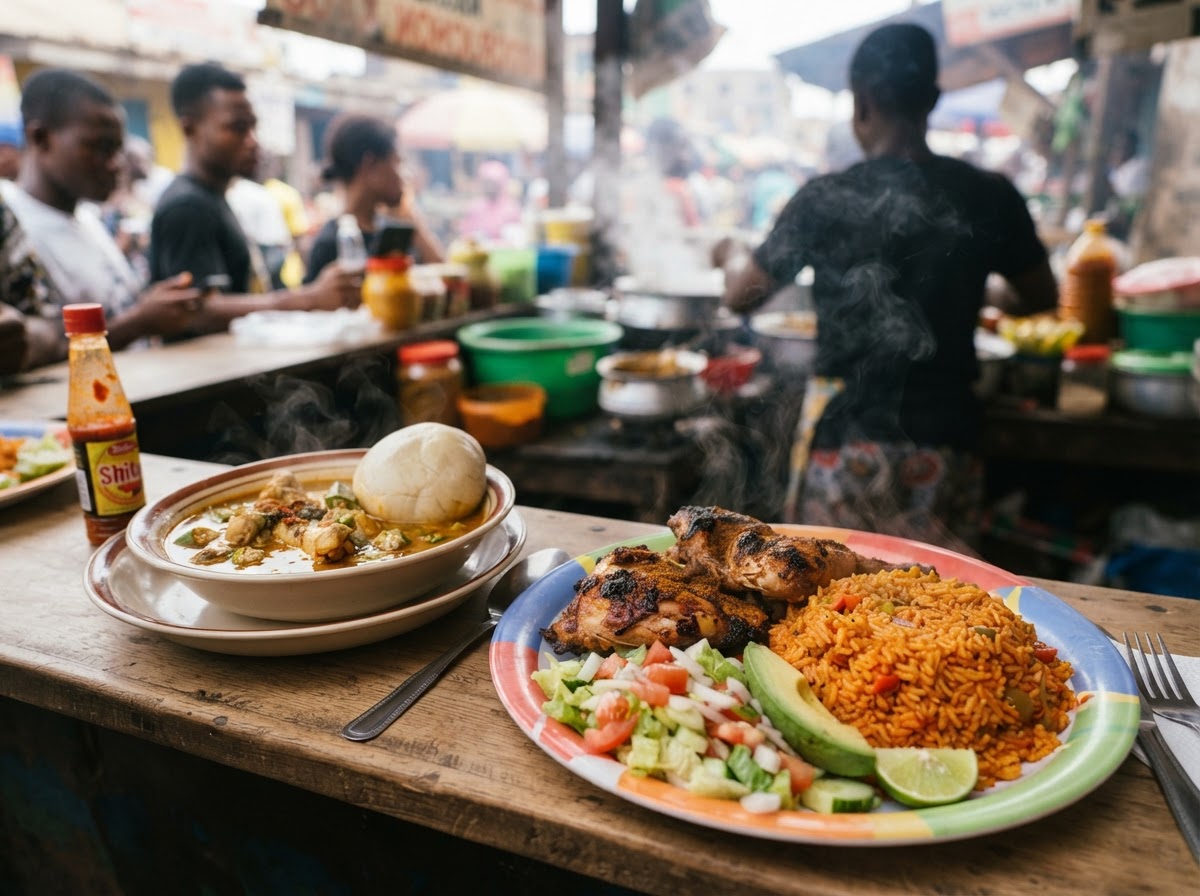
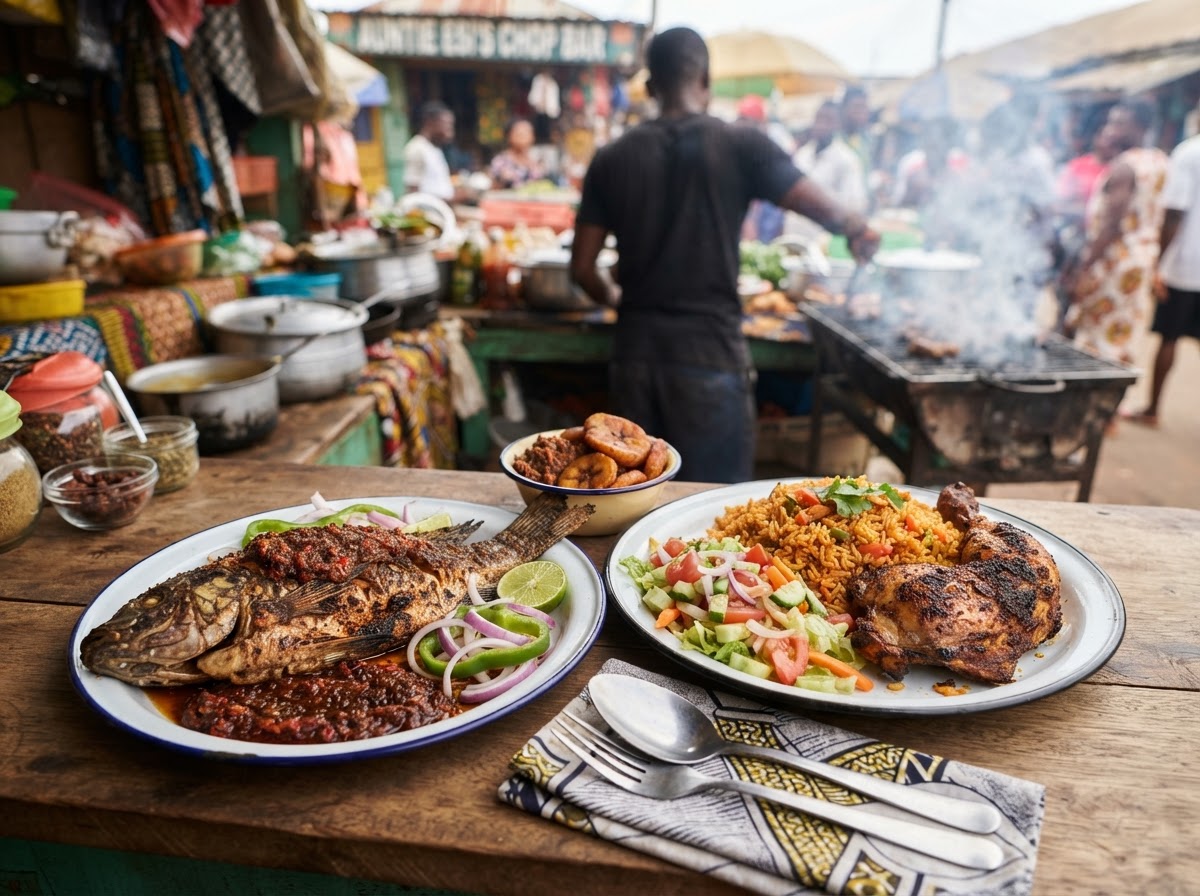
The famous "party jollof" flavor — a smoky, slightly charred taste — comes from the rice catching slightly at the bottom of the pot, creating a layer of crust that's scraped and mixed back in. This is the flavor that Ghanaians crave, and it's the hallmark of great jollof. Jollof is traditionally served with grilled chicken, fried plantain, and a side of shito. It's a celebration dish — served at parties, weddings, and festivals — and it's one of the dishes that Ghanaians are most proud of.
The Key Differences
Here are the key differences between waakye and jollof rice, side by side:
Ingredients: Waakye is rice and beans cooked together with sorghum leaves. Jollof is rice cooked in a tomato and pepper sauce.
Color: Waakye is reddish-brown from the sorghum leaves. Jollof is deep red from the tomato and pepper sauce.
Flavor: Waakye is earthy and slightly savory, with the flavor of the beans and the leaves. Jollof is smoky and savory, with the flavor of the tomatoes and peppers.
Texture: Waakye has the texture of rice and beans cooked together — the beans are soft, the rice is separate. Jollof has the texture of rice cooked in sauce — the rice is slightly firmer, having absorbed the sauce.
Technique: Waakye is a one-pot dish — rice and beans cooked together. Jollof is a two-step dish — sauce made first, then rice added.
Accompaniments: Waakye is served with stew, shito, gari, spaghetti, and eggs. Jollof is served with grilled chicken, fried plantain, and shito.
Occasion: Waakye is an everyday dish — eaten for lunch or dinner. Jollof is a celebration dish — served at parties, weddings, and festivals.
Where to Find the Best Waakye and Jollof in Ghana
Both waakye and jollof are available across Ghana, from street-side joints to fine dining restaurants. Here are some of the best spots to find them, as reviewed by the Khora community:
- Waakye in Accra: EJ Cuisine Check Check 24hrs in East Legon, Check Check City Restaurant in Osu, Foodmuse Kitchen in Adabraka
- Waakye in Kumasi: Rubi's Special Waakye in Ejisu, Sady's Pub and Restaurant in Kumasi
- Jollof in Accra: Pizza World - East Legon Branch in East Legon, 10:10 Joint in Osu, Delish by Hanwils in Dansoman
- Jollof in Kumasi: Smokeys Eatery in Santasi, Gesundes Kitchen in Asafo, Kumasifie Foods in Kumasi
Each of these restaurants has earned perfect five-star ratings from the Khora community. Click through to each profile for full menus, photos, community reviews, directions, and reservation options.
Which One Should You Try First?
If you're new to Ghanaian food, the question is: waakye or jollof first? The answer is: both, but start with jollof. Jollof is more approachable — the tomato and pepper sauce is familiar to most palates, and the smoky flavor is a revelation. Waakye is more traditional — the combination of rice and beans, with the earthy flavor of the sorghum leaves, is an acquired taste. But both are worth trying, and both are worth appreciating.
Start with jollof at a spot like Check Check City Restaurant in Osu, which has 22 five-star reviews and a loyal following. Then try waakye at a spot like Rubi's Special Waakye in Kumasi, which specializes in the dish. Both will give you a great introduction to the two foundational rice dishes of Ghana, and both will make you a more informed and appreciative eater.
Ready to explore? Browse restaurants in Greater Accra or browse restaurants in Kumasi on Khora to find waakye and jollof near you. Both dishes are worth the journey — and now you know the difference.
Ready to explore?
Search and discover the restaurants mentioned in this guide on Khora.
Find Restaurants