Kelewele: Exploring Ghana’s Favorite Spiced Fried Plantain
Kelewele is more than just a snack; it's a staple of Ghanaian culinary culture. This article dives into its origins, key spices, and where to find the best versions in Accra.
Kelewele: Exploring Ghana's Favorite Spiced Fried Plantain
There are few aromas in Ghana more instantly comforting, more viscerally evocative of home, than the smoky, spiced fragrance of kelewele sizzling in a cast-iron pan. Walk through any Accra neighborhood at dusk — from the buzzing streets of Osu to the quieter lanes of Labone — and you will almost certainly encounter a kelewele seller, her wares piled high in a bowl lined with torn newspaper, the golden-brown cubes catching the glow of a bare bulb or a charcoal fire. This is not merely street food. Kelewele is a cultural institution, a sensory landmark, and for many Ghanaians, the taste of childhood, of late nights, of belonging.
In this deep dive, Khora takes you inside the world of kelewele — its storied origins, the precise alchemy of spices that makes it so irresistible, the regional variations that prove Ghana's culinary creativity knows no bounds, and the Accra spots where you can find versions worthy of your time and your cedi.
What Exactly Is Kelewele?
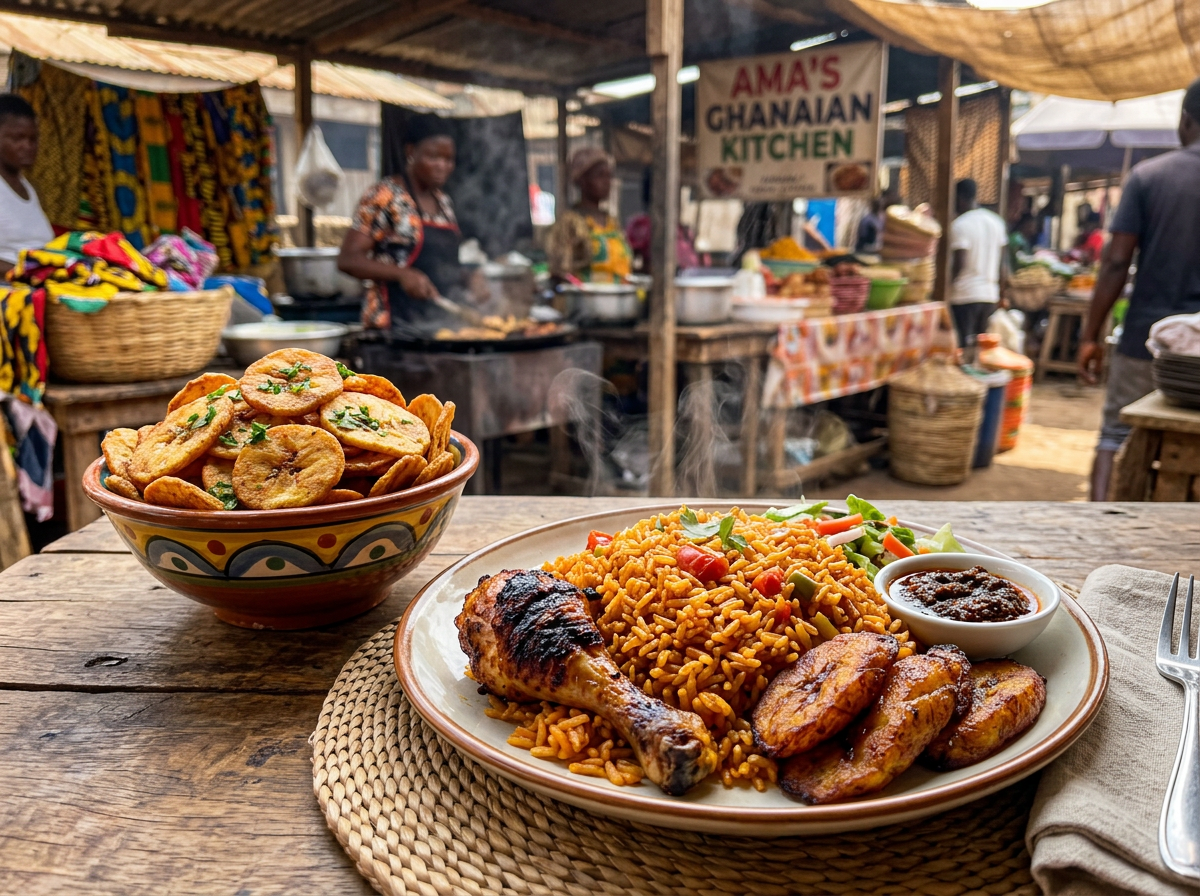
At its most elemental, kelewele is ripe plantain — cut into cubes or wedges, marinated in a boldly spiced paste, then deep-fried until the exterior caramelizes into a crackling, fragrant crust while the interior remains soft, sweet, and yielding. But to describe kelewele purely in those terms is like describing jollof rice as simply "tomato rice." The description is technically accurate and profoundly insufficient.
The word itself is thought to derive from the Ga language, spoken by the indigenous people of the Greater Accra region, and it carries with it generations of culinary knowledge. The choice of plantain is critical — the fruit must be very ripe, ideally with a deeply yellowed skin flecked with black, at that perfect tipping point where the natural sugars have fully developed. Too firm, and you lose the caramel sweetness that is the soul of the dish. Too soft, and the cubes disintegrate in the oil. Getting it right is an art form, one that experienced kelewele vendors have mastered through years of practice.
The Anatomy of a Perfect Kelewele
The perfect piece of kelewele offers a specific sequence of sensations. First, the bite through the slightly crisp, darkened exterior — burnished by the Maillard reaction and the sugars in the plantain interacting with the hot oil. Then, the immediate warmth of ginger and pepper hitting the back of the palate. Then, the sweetness of the plantain itself, yielding and almost jammy at the center. Finally, the lingering heat and earthiness of the spice blend, which stays with you long after the last bite. It is a snack that tells a complete story in seconds.
The Origins and Cultural History of Kelewele
Plantains have been cultivated in West Africa for centuries, likely introduced through trade routes from Southeast Asia via the Indian Ocean and across the continent. By the time European traders arrived on the Gold Coast in the fifteenth and sixteenth centuries, plantains were already a staple crop, prized for their versatility and their ability to thrive in tropical climates. Fried plantain — in various forms — appears across nearly every West African culinary tradition, from Nigeria's dodo to Côte d'Ivoire's alloco. But kelewele is distinctly Ghanaian, and more specifically, it carries the fingerprints of Accra's Ga-Adangbe culinary heritage.
The practice of marinating plantain in spiced pastes before frying is what sets kelewele apart from its West African cousins. This technique reflects the deep influence of Ghanaian spice culture — particularly the reverence for ginger, which has been cultivated in Ghana for centuries and forms the backbone of countless traditional preparations. Over time, kelewele evolved from a home preparation into one of Ghana's most beloved street foods, especially popular in the evenings when vendors set up along roadsides, near markets, outside churches after Sunday service, and at the edges of drinking spots and chop bars.
"Kelewele is the food that connects every Ghanaian to every other Ghanaian, regardless of ethnicity or class. The professor and the carpenter can both be standing at the same roadside bowl, eating with their hands, completely equal in that moment." — A longtime Accra food vendor, speaking to Khora
Its rise as a street food phenomenon accelerated through the latter half of the twentieth century as Accra urbanized and street food culture flourished. Today, kelewele is not just a street snack — it appears on the menus of restaurants, in the offerings of caterers, and on tables at family gatherings and celebrations across the country.
The Spice Blend: Where the Magic Lives
Ask ten different kelewele vendors what goes into their spice mixture, and you will get ten different answers — each delivered with the quiet confidence of someone who knows their recipe is the best one. This is the beautiful, maddening truth of kelewele: the spice blend is deeply personal, often a closely guarded family secret, and the source of fierce, affectionate debate among enthusiasts.
That said, there is a core set of ingredients that forms the foundation of virtually every authentic kelewele marinade:
- Fresh ginger (grated or blended): The non-negotiable heart of kelewele. Ginger provides the dominant flavor note — sharp, warming, and slightly floral. Ghanaian ginger, grown primarily in the Ashanti and Brong-Ahafo regions, is among the most pungent and aromatic in the world, and it makes a noticeable difference.
- Scotch bonnet or fresh pepper: Heat is essential. Most vendors use blended fresh pepper — often a combination of scotch bonnet and the milder tatashe (bell pepper) to control the burn without sacrificing flavor complexity.
- Onion: Grated or blended into the marinade, onion adds depth and a subtle sweetness that complements the natural sugars of the ripe plantain.
- Salt: A crucial counterbalance to the sweetness. Getting the salt level right is one of the key markers of a skilled kelewele maker.
- Ground cloves: Not universal, but used by many vendors in Accra, cloves add a warm, slightly medicinal depth that elevates the spice blend considerably.
- Anise seeds or anise powder: Another optional but common addition, lending a subtle licorice note that gives kelewele its distinctive complexity.
- Nutmeg: Used sparingly by some vendors, nutmeg adds a warm, woodsy undertone that rounds out the sharpness of the ginger.
The plantain cubes are typically tossed in this spice paste and left to marinate — sometimes for just fifteen minutes, sometimes for several hours, depending on the vendor's practice. The longer the marination, the deeper the spice penetration, and the more intensely flavored the final product. This is one of the most significant variables between a good kelewele and a truly transcendent one.
The Oil Question
The frying medium matters more than most people realize. Traditional kelewele is fried in a generous amount of vegetable or palm oil, heated to a high temperature that ensures a rapid crust formation. Some older-school vendors still use palm oil, which adds its own distinctive flavor and a gorgeous deep-orange hue to the finished product. Many modern vendors use refined vegetable oil for a cleaner taste. Both approaches have their merits and their devoted advocates.
Regional Variations Across Ghana
While kelewele is most closely associated with Accra and the greater southern Ghana region, it has spread throughout the country and, in doing so, has absorbed local influences and variations that make exploring it across regions a genuinely rewarding culinary exercise.
- Kumasi style: In Ghana's second city, kelewele tends to be cut into larger, chunkier pieces and fried slightly less crisply than the Accra version, preserving more of the soft, molten interior. The spice blend in Kumasi often features more pepper and less ginger, reflecting Ashanti flavor preferences.
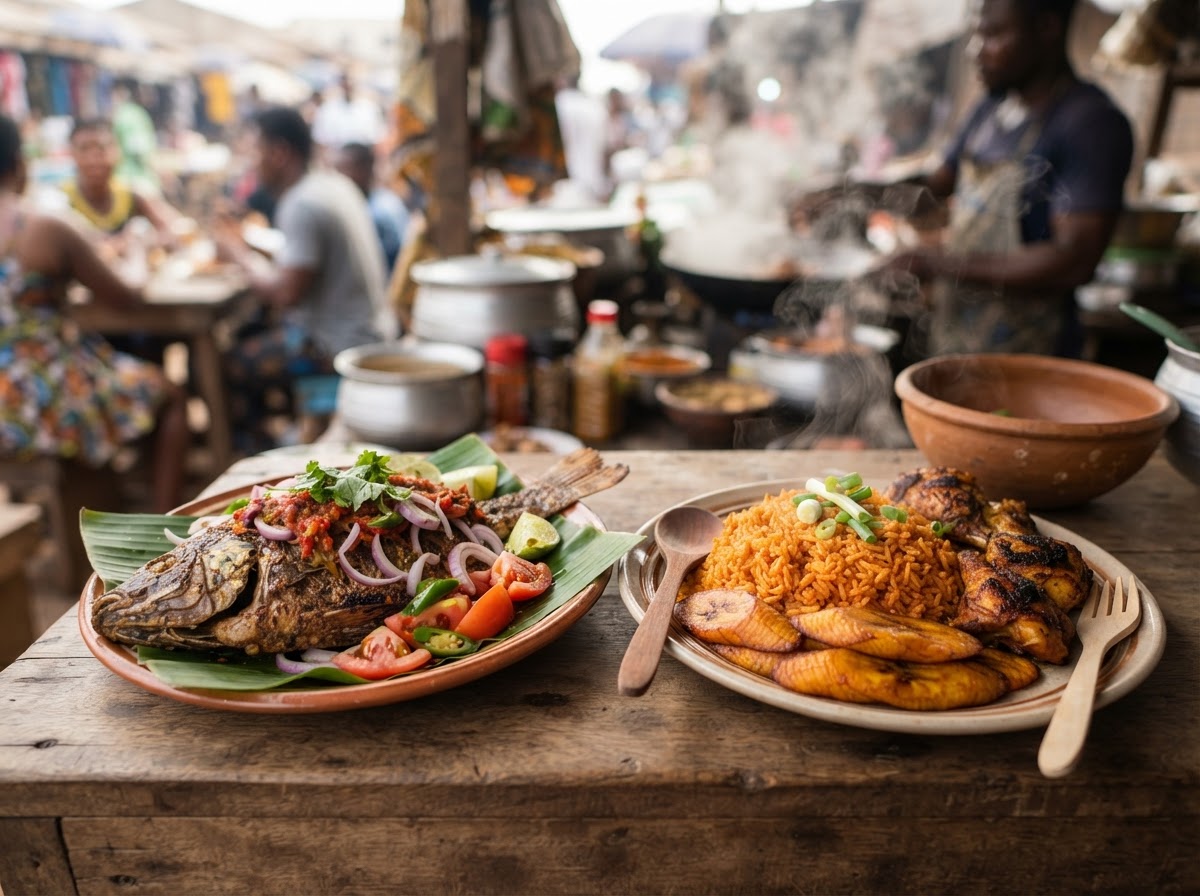
- Cape Coast variations: The Central Region, home of Ghana's beloved fante kenkey, produces a version of kelewele that is sometimes served alongside grilled fish, blurring the line between snack and full meal. The spice blends here frequently incorporate ground crayfish or dried shrimp, adding an umami dimension that is uniquely compelling.
- Northern Ghana influences: In the north, where the culinary tradition is distinct, you find preparations that echo kelewele but sometimes use different varieties of plantain or banana, and the spice blends can incorporate dawadawa (locust bean), adding a fermented, funky depth.
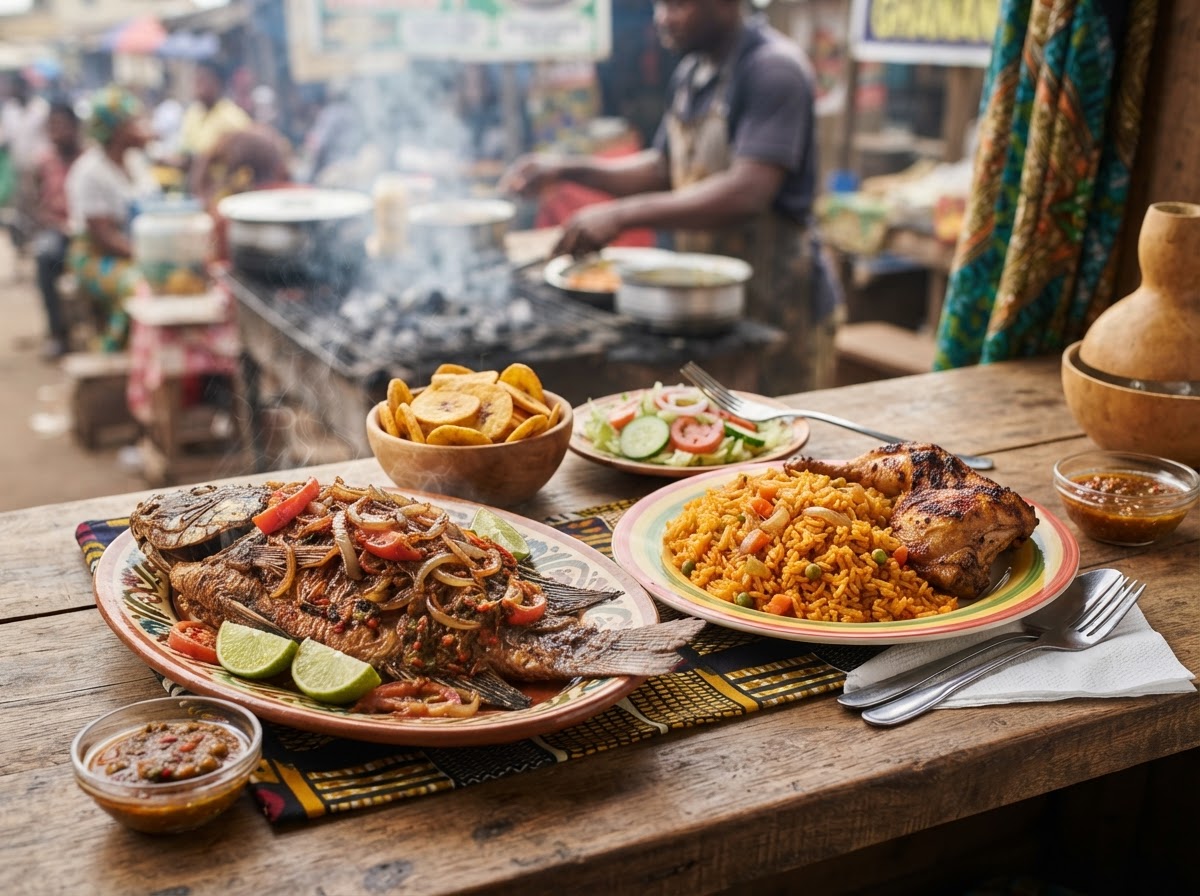
- Modern Accra fusion: In the city's more contemporary food spaces, kelewele has become an ingredient as much as a standalone dish — appearing as a side to jollof rice, as a topping for rice bowls, and in innovative pairings with roasted peanuts, which is itself a classic combination beloved across the country.
How Kelewele Is Eaten: The Rituals and Pairings
The most traditional and beloved way to eat kelewele is straight from the vendor's bowl, standing at the roadside, burned fingers and all, the warm cubes popped directly into the mouth while they are still steaming. There is a particular joy in this that no restaurant plating can fully replicate — the immediacy of it, the casual communion with strangers doing the same thing beside you.
That said, kelewele is a remarkably versatile food that fits naturally into a range of contexts and pairings:
- With roasted groundnuts (peanuts): This is the classic pairing, beloved by generations of Ghanaians. The nutty, slightly salty peanuts balance the sweet heat of the kelewele in a combination that feels almost cosmically ordained.
- With waakye: Ghana's iconic rice-and-beans dish frequently appears on plates alongside kelewele as a component of a larger waakye spread — alongside fried fish, stew, spaghetti, and all the other accoutrements.
- With kenkey: In coastal Accra, kelewele alongside a ball of fante or ga kenkey, with a spicy pepper sauce, is a satisfying and deeply traditional combination.
- As a restaurant side: Many of Accra's contemporary dining establishments serve kelewele as a side dish or starter, sometimes with creative dipping sauces or as an accompaniment to grilled meats and seafood.
"The peanut and kelewele combination is one of the great unsung flavor pairings of world cuisine. It deserves the same recognition as wine and cheese, or prosciutto and melon."
Editor's Recommendations: Where to Experience Great Ghanaian Food in Accra
While the best kelewele in Accra is undeniably found at the hands of the city's dedicated street vendors — those women with their cast-iron pans and their decades of accumulated skill — the following establishments on the Khora platform offer outstanding Ghanaian food experiences that celebrate the broader culinary tradition that kelewele belongs to. Many serve kelewele as part of their offerings, and all of them represent the warmth and ambition of Accra's dining scene.
Eno Ama Chop Bar — Nima
If you want to understand Ghanaian food at its most authentic and community-rooted, a chop bar is where you need to be. Eno Ama Chop Bar in Nima carries a perfect 5.0 rating and represents exactly the kind of no-frills, deeply genuine food experience that defines the chop bar tradition. This is the environment where kelewele makes perfect contextual sense — as part of a broader Ghanaian meal eaten with intention and pleasure.
Waakye WuraGh (Westlands) — Greater Accra
Waakye and kelewele are natural companions, and Waakye WuraGh has earned its stellar 5.0 rating by doing Ghanaian street food with genuine commitment. A bowl of their waakye with kelewele on the side is the kind of meal that reminds you why Ghanaian food deserves far more international attention than it currently receives.
Ginkell's Palm Wine Bar (Zen Garden Labone) — Labone
For those who want to experience kelewele in a more relaxed, social setting, Ginkell's Palm Wine Bar in Labone offers the ideal combination: excellent Ghanaian and West African food, including fried plantain preparations, in an atmospheric garden setting perfect for an evening out. The 5.0 rating reflects a space that takes Ghanaian culinary culture seriously.
Next Door Beach Restaurant — Greater Accra
There is something particularly right about eating spiced fried plantain near the ocean, and Next Door Beach Restaurant offers exactly that kind of experience. With a 5.0 rating and a menu spanning Ghanaian, West African, and seafood options, this is a venue where kelewele alongside grilled fish or fresh seafood makes for a supremely satisfying coastal meal.
Foodmuse Kitchen — Adabraka
For a more contemporary, thoughtfully curated take on Ghanaian food, Foodmuse Kitchen in Adabraka is a standout. Their focus on quality Ghanaian and West African preparations, including vegetarian options, signals a kitchen that thinks seriously about ingredients and tradition. A perfect stop for those who want to explore kelewele in a more considered food context.
Kenkey Stand Buffet — Greater Accra
The buffet format at Kenkey Stand Buffet is a celebration of everything that makes Ghanaian street food culture so joyful — abundance, variety, and the pleasure of eating freely. With a 5.0 rating and a broad menu of Ghanaian and West African classics, this is an ideal place to experience kelewele as part of a larger Ghanaian food spread.
Food Joint — Greater Accra
Sometimes the best food experiences come from places with the simplest names. Food Joint has earned its 5.0 rating the honest way — by cooking Ghanaian and West African food with consistency and care. A reliable stop for anyone exploring the street food landscape of the city.
Tips for Finding the Best Kelewele in Accra
Beyond the restaurant scene, here is the honest truth: the finest kelewele in Accra is almost certainly being made by a vendor you will find through word of mouth, local knowledge, and a willingness to explore. A few practical tips for your kelewele quest:
- Evening is prime time. Most kelewele vendors set up in the late afternoon and early evening. The timing is tied partly to tradition and partly to practical logic — the cooler evening air makes standing over a hot pan bearable.
- Look for the crowd. A vendor with a consistent cluster of repeat customers is almost always a vendor worth stopping for. Accra residents are knowledgeable and loyal food critics.
- Freshness is everything. Ask for a fresh batch rather than accepting cubes that have been sitting. Good vendors will usually oblige, and the difference between freshly fried kelewele and kelewele that has been sitting for twenty minutes is significant.
- Ask about the spice level. Many vendors will adjust the heat if asked. Don't be shy — engaging with vendors about their food is part of the experience and often leads to fascinating conversations about their recipes and history.
- Bring cash. Street kelewele remains firmly in the cash economy. A generous portion typically costs very little, making it one of the great bargain pleasures of Accra life.
Bottom Line
Kelewele is one of those rare foods that operates simultaneously as humble street snack and as a profound expression of cultural identity. It asks very little of you — a few cedis, a willingness to eat with your hands, an openness to heat and sweetness in the same bite — and gives back immeasurably. In those spiced, caramelized cubes of ripe plantain, you taste Ghana's agricultural abundance, its spice traditions, its street culture, and its instinctive generosity.
Whether you find it at a roadside stand in Nima, as part of a waakye spread in Westlands, alongside grilled seafood near the coast, or at one of Accra's wonderful chop bars and food joints, kelewele rewards attention. Pay it the respect it deserves: eat it hot, eat it fresh, and eat it with curiosity. You will not be disappointed.
Explore all the restaurants featured in this article — and discover hundreds more — on Khora, Ghana's premier platform for restaurant discovery. Your next great meal is closer than you think.
Ready to explore?
Search and discover the restaurants mentioned in this guide on Khora.
Find Restaurants