Discover the Best Waakye Restaurants in Accra, Ghana
Explore the top waakye restaurants in Accra, where tradition meets taste. Discover what makes this beloved dish unique, from its iconic sides to the secrets of extraordinary preparation.
Discover the Best Waakye Restaurants in Accra, Ghana
There is no dish that captures the soul of Accra quite like waakye. From the pre-dawn hustle of a roadside seller ladling steaming portions onto banana leaves, to the carefully curated plates now appearing at sit-down eateries across the city, waakye is Ghana's great equalizer — a dish that feeds office workers, market traders, students, and chiefs with equal generosity. If you are serious about eating well in this city, finding the best waakye restaurants in Accra is not just a culinary quest. It is a cultural education.
At Khora, we have eaten our way through neighbourhoods, argued passionately over shito consistency, and held strong opinions about the ideal gari-to-rice ratio. This guide is the result of that delicious fieldwork. Whether you are a first-time visitor trying waakye for the very first time or a born-and-bred Accra local who has been eating it since childhood, this is your definitive ranking and review of where to find the finest waakye in the capital.
What Makes Waakye So Special?
Waakye — pronounced waa-chay — is a dish of rice and beans cooked together with dried sorghum leaves, which give the meal its unmistakable deep reddish-brown colour and a subtle, earthy depth of flavour that no artificial colouring could ever replicate. The name itself comes from the Hausa word for beans, and the dish has strong roots in northern Ghana before making its triumphant march southward into the heart of Accra, where it has been embraced so completely that it now feels entirely, irrevocably native to the city.
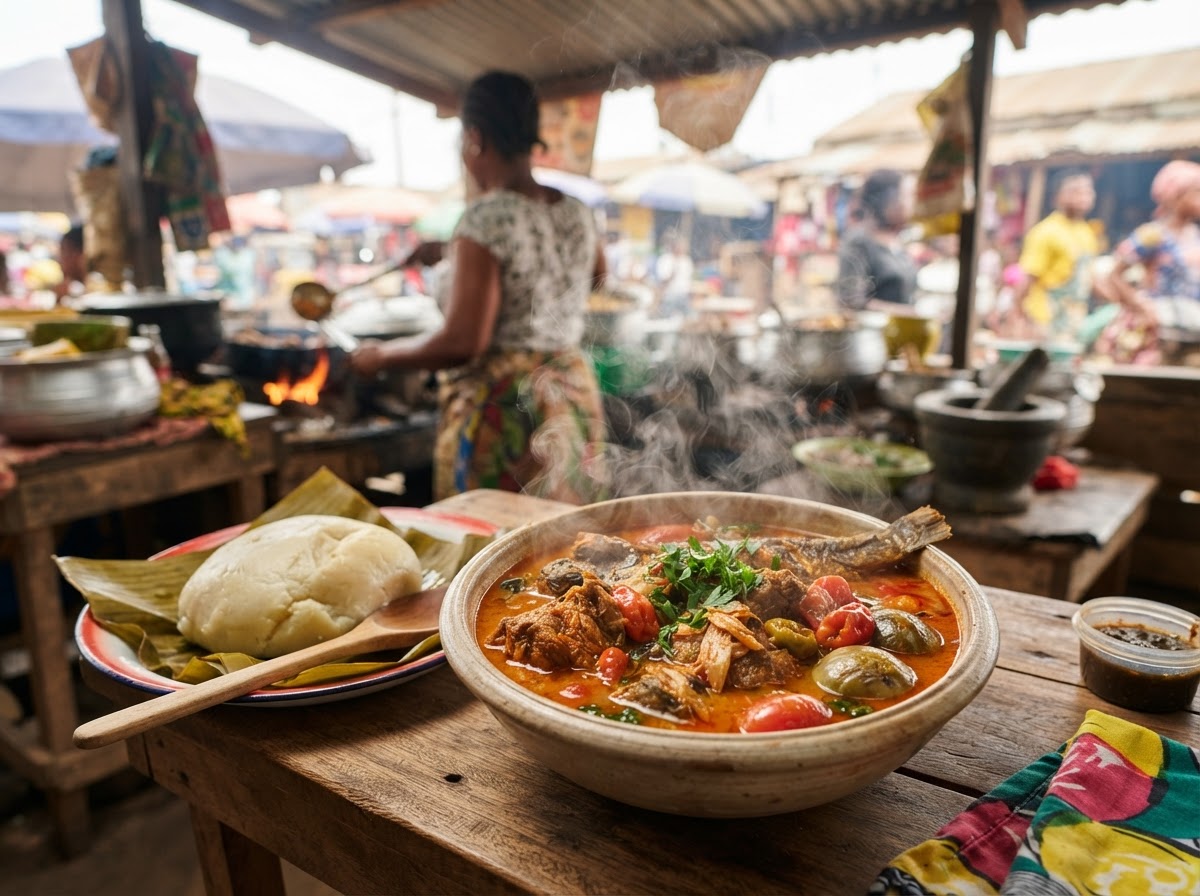
What elevates waakye from a simple rice-and-beans dish to something truly extraordinary is the theatre of accompaniments that surround it. A proper waakye spread is a symphony of textures and flavours, each component playing a crucial supporting role. To eat waakye in Accra is to understand that Ghanaian cuisine is not minimalist — it is generous, layered, and intentional.
The Essential Accompaniments
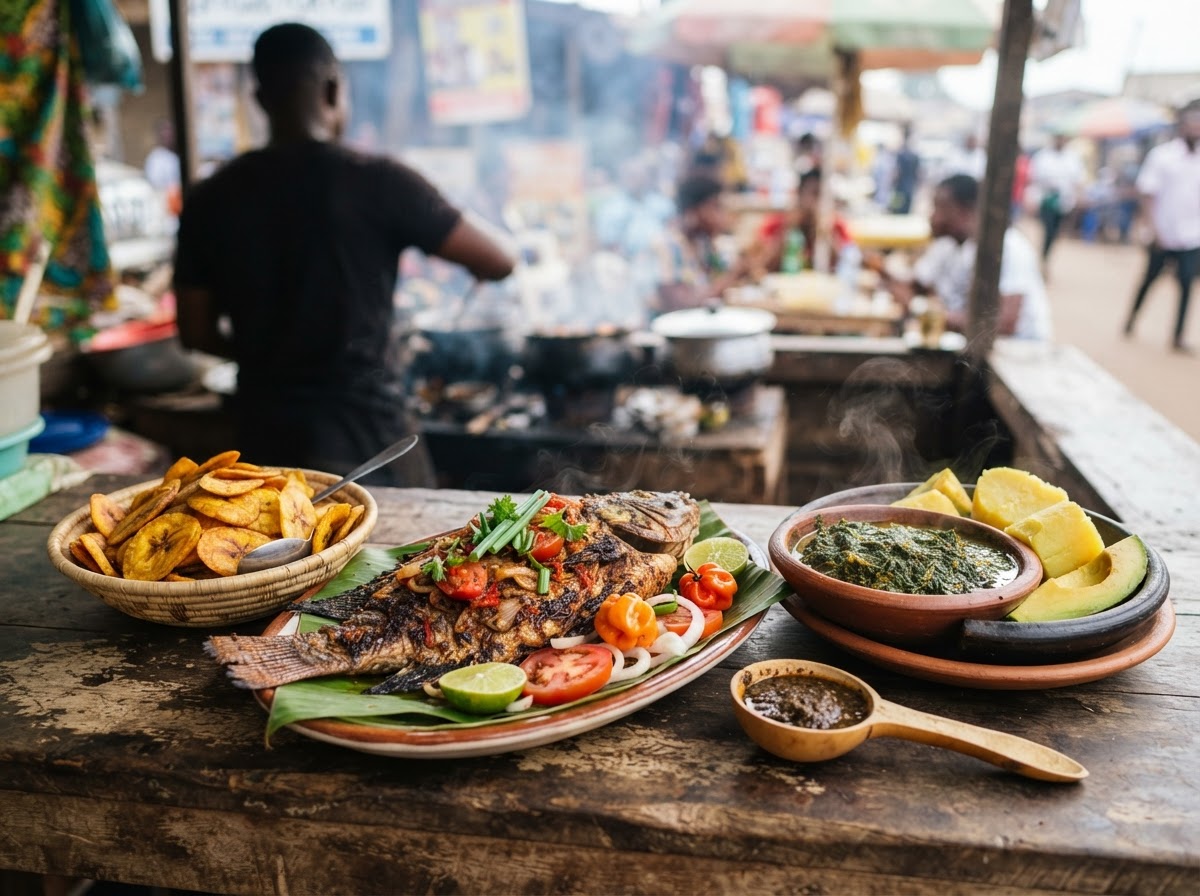
- Shito: The dark, intensely flavoured chilli pepper sauce made with dried fish, shrimp, and a complex blend of spices. A good shito should have depth, heat that builds slowly, and a slight smokiness. A bad shito will tell you everything you need to know about the kitchen's standards.
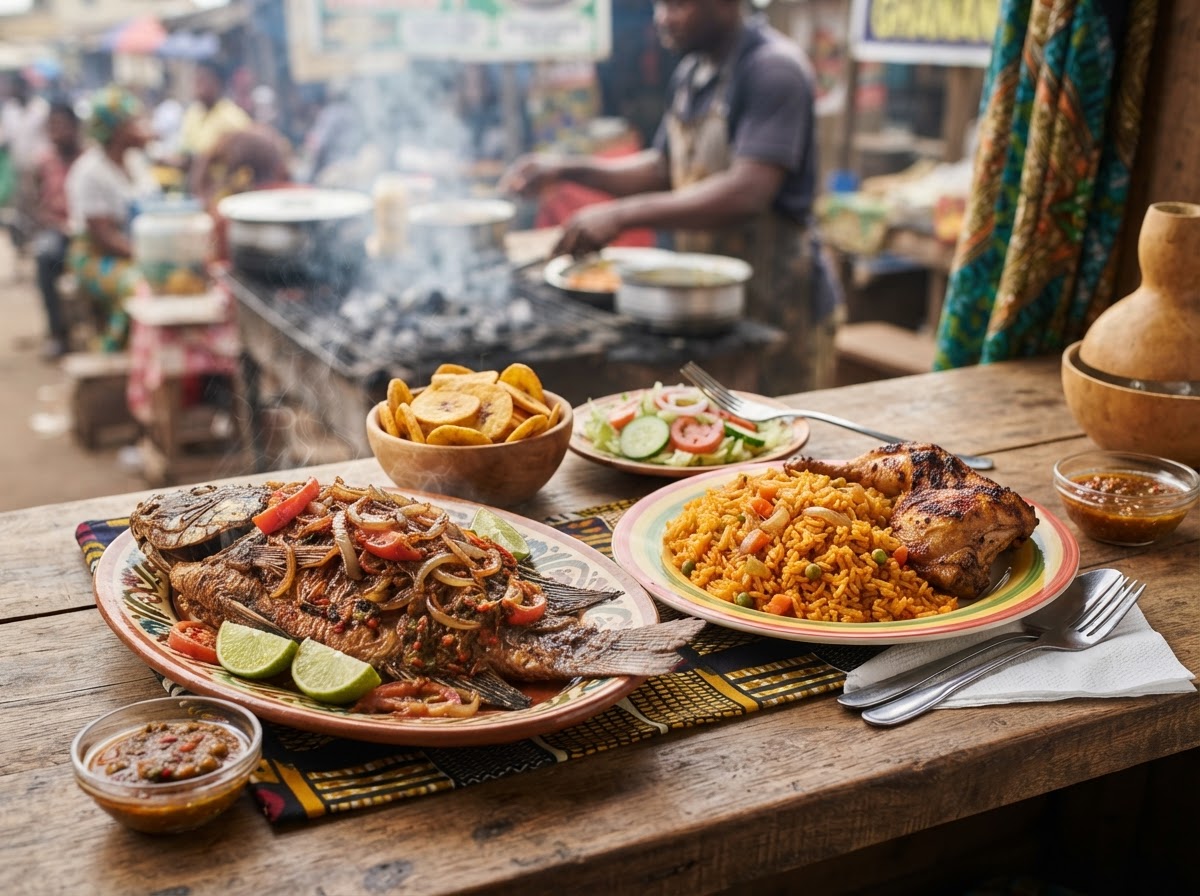
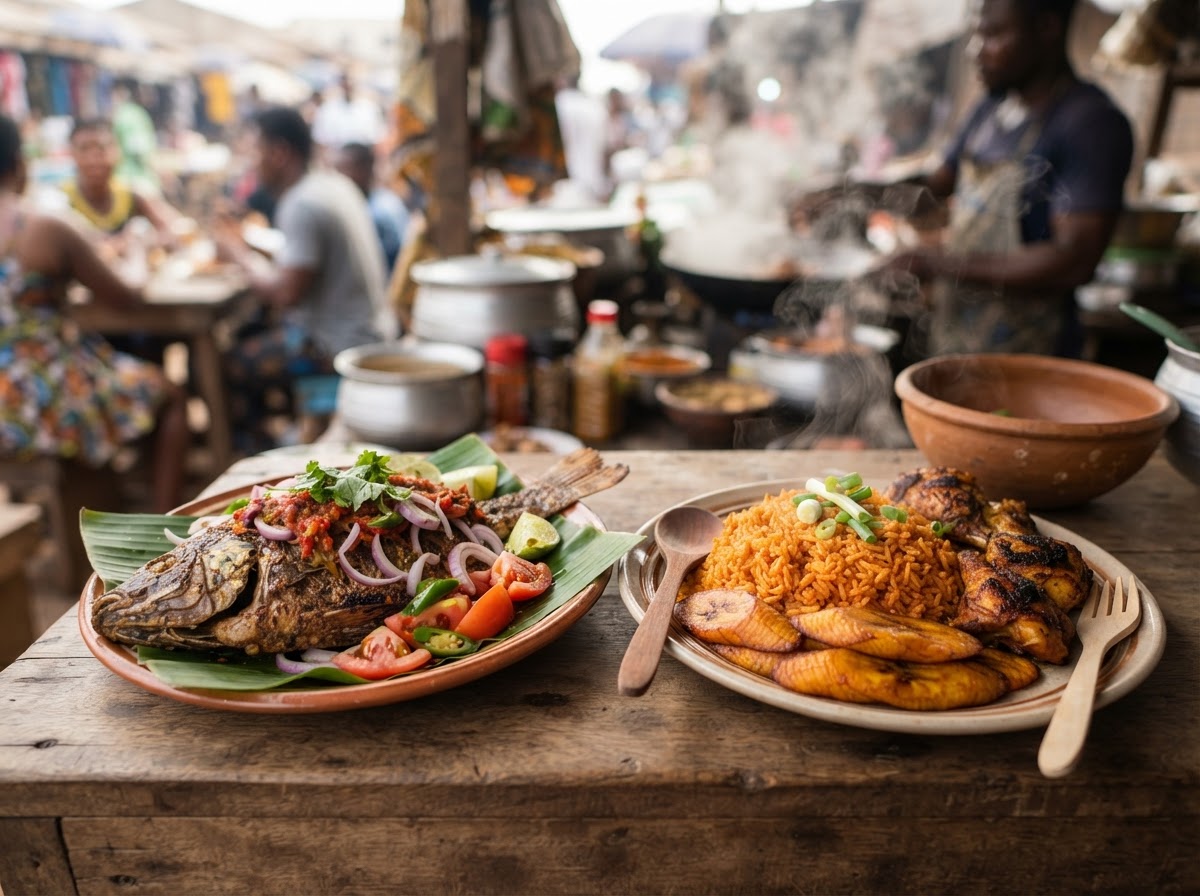
- Fried Fish: Typically tilapia or mackerel, fried golden and crisp. The fish should have a seasoned crust that shatters on first bite, yielding moist, flavourful flesh beneath. Overcooked or under-seasoned fish is a cardinal sin at any waakye stand worth its salt.
- Talia (Spaghetti): One of waakye's most delightful quirks for the uninitiated — soft-cooked spaghetti served as a side, often with a light tomato-based sauce. It sounds unconventional, but on a waakye plate, it is absolutely right. The starch-on-starch combination is comforting, filling, and entirely justified.
- Gari: Coarsely ground dried cassava, sprinkled over the top for a satisfying crunch and a slightly tart, fermented note that cuts through the richness of everything else on the plate.
- Egg: A boiled or fried egg, halved and placed atop the mound, is practically a non-negotiable finishing touch for the serious waakye eater.
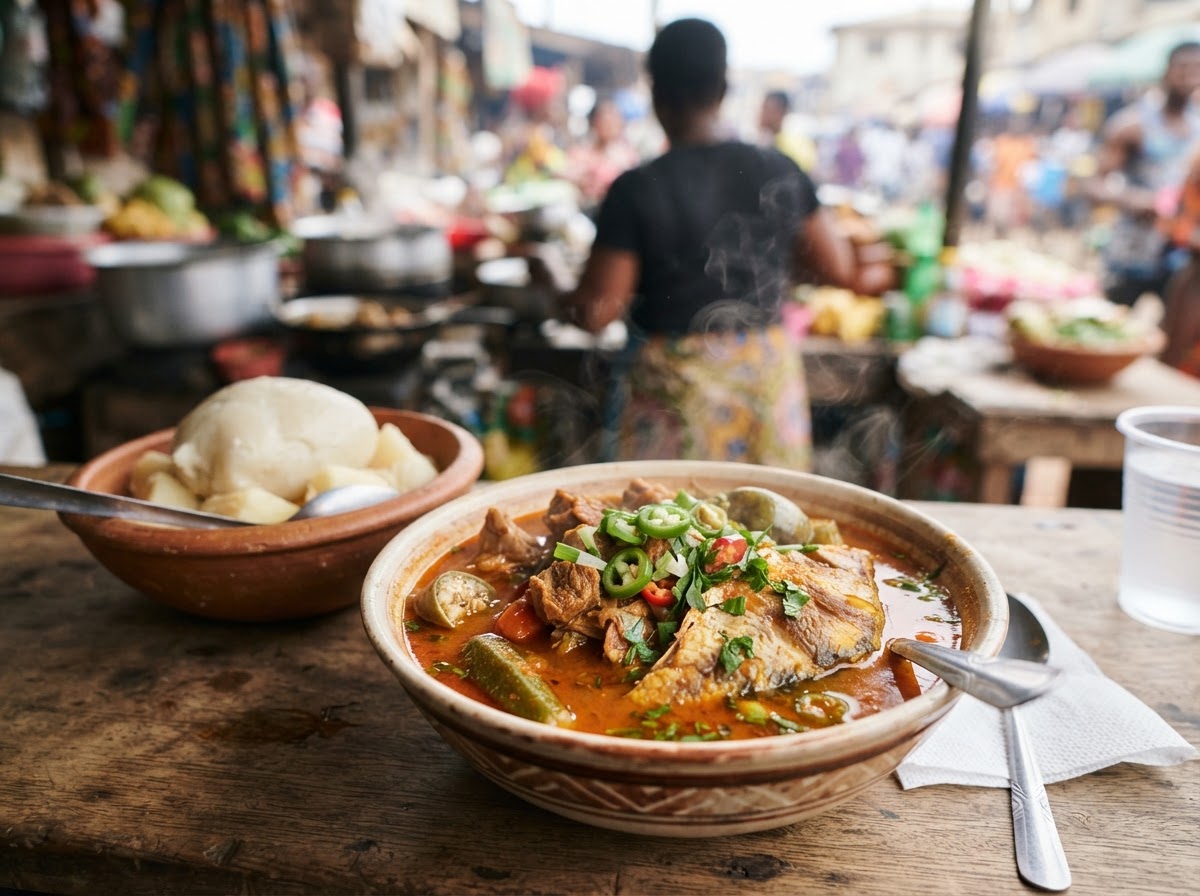
- Stew: A rich tomato and palm oil stew, often with beef or tripe, ladled generously over the rice and beans. The quality of this stew is often the single greatest differentiator between average and outstanding waakye.
- Wele (Cow Skin): Soft, gelatinous strips of cooked cow skin that add a chewy, unctuous texture and a savoury depth that devoted waakye eaters absolutely swear by.
What Separates Average Waakye from Extraordinary Waakye
In Accra, waakye is everywhere. You will find it on nearly every corner, at every market, and outside every school and office block between the hours of seven and eleven in the morning — because make no mistake, waakye is primarily a breakfast and brunch food, though devoted fans will eat it at any hour without apology.
But proximity and availability do not guarantee quality. The difference between a forgettable plate and a transcendent one comes down to a handful of critical factors that the best waakye restaurants in Accra understand intuitively.
The Rice-and-Bean Ratio
This is more contentious than you might expect. True waakye lovers have strong opinions. Too many beans and the dish becomes heavy and monotonous. Too much rice and it loses its identity. The ideal plate has a balance that allows both elements to shine, with the beans retaining their shape — soft but not mushy — and the rice cooked through without becoming a glutinous paste.
The Sorghum Leaves
Authentic waakye must be cooked with dried sorghum leaves or stalks. This is non-negotiable. Shortcuts using artificial food colouring produce a flat, one-dimensional hue that any experienced eye will immediately identify. The real thing has a warmth and complexity of colour — brownish-purple hues that shift in different lights — and a subtle flavour contribution that synthetic alternatives simply cannot replicate.
The Shito
A waakye seller's shito is their signature, their fingerprint, their reputation. The finest shito takes hours to prepare and days to mature. It should be dark, almost black, glistening with oil, and packed with layers of flavour from dried herrings and crayfish ground with scotch bonnet peppers and aromatic spices. It should have heat, but the heat should not be the only thing you taste. If a waakye spot's shito tastes like generic pepper sauce, move on.
The Freshness of Service
Waakye is best eaten fresh, which is why the best spots sell out early. A pot of waakye that has been sitting for three hours will never taste as vibrant as one that was ladled out at the height of the morning rush. The best vendors and restaurants understand this and manage their supply accordingly — cooking in batches, maintaining heat carefully, and knowing when to call it a day rather than serve a degraded product.
Neighbourhood Guide: Where to Find Great Waakye Across Accra
Accra's waakye scene is distributed unevenly across the city's neighbourhoods, each with its own character and its own loyal clientele. Knowing where to look is half the battle.
Osu: The Cosmopolitan Waakye Scene
Osu is Accra's most internationally visible neighbourhood — a dense, vibrant strip of restaurants, bars, boutiques, and cultural institutions that runs along the Oxford Street corridor and spills outward into quieter residential streets. The waakye scene here reflects the neighbourhood's dual identity: there are traditional street-side sellers who have occupied the same corner for decades, serving to the working residents who wake early and eat well before the day begins, and there are increasingly more polished casual dining spots that have recognised waakye as a menu essential. In Osu, you can eat waakye on a plastic stool at six in the morning or on a proper restaurant chair at noon — and if you know where to go, both experiences will be deeply satisfying.
Labone: Understated Excellence
Labone is one of Accra's quieter, more residential neighbourhoods, tucked between the noise of Osu and the commercial density of Cantonments. Its food scene has a low-key confidence — you have to know where to go, because the best spots here do not advertise aggressively. They rely on word of mouth, on the loyalty of neighbours who have eaten there for years, and on the quality of their food speaking for itself. Labone's waakye sellers tend to be meticulous and unhurried, serving to a clientele that values consistency above novelty. Ginkell's Palm Wine Bar (Zen Garden Labone), while primarily known as a bar and grill destination, is emblematic of the neighbourhood's food philosophy — quality ingredients, relaxed atmosphere, and a genuine commitment to Ghanaian culinary identity.
Dzorwulu: The Hidden Gem Quarter
Dzorwulu sits in that interesting middle ground between Accra's older residential areas and its newer commercial corridors — and its food scene reflects that in-between quality beautifully. Less touristed than Osu and less self-consciously trendy than some of East Legon's newer arrivals, Dzorwulu has some genuinely wonderful waakye options that feel authentic precisely because they are not trying to be anything other than what they are. Mornings here have a particular rhythm, and finding a brilliant waakye spot tucked beside a small shop or under a canopy near a junction is one of Accra's great small pleasures.
Nima: The Heartland
If Accra's waakye has a spiritual homeland, many would argue it is Nima. This densely populated, predominantly Muslim neighbourhood in the north of the city has a deep connection to the Hausa culinary traditions that gave us waakye in the first place, and the waakye here has a character and a confidence that reflects that heritage. Eno Ama Chop Bar in Nima, which holds a perfect 5.0 rating, represents the chop bar tradition at its finest — unpretentious, hardworking, and absolutely devoted to feeding people well. A chop bar in Nima is not just a restaurant. It is a neighbourhood institution, a social anchor, a place where real food is served without ceremony to people who know exactly what they want.
Editor's Recommendations: The Khora Quick Picks
"The best waakye in Accra is always found where the locals are lined up before eight in the morning, where the pot is being actively stirred, and where the shito has clearly been made in-house. These are our top picks for the waakye experience you will not forget."
🏆 Best Overall: Waakye WuraGh (Westlands)
The name says it all — wura means owner or master in Twi, and Waakye WuraGh in Westlands, Greater Accra, has earned that title with a perfect 5.0 rating from its devoted customer base. This is a street food operation that takes its craft seriously. The rice and beans are cooked to that elusive ideal consistency, the shito is made on the premises with the kind of dark, layered complexity that takes time and care to achieve, and the full accompaniment spread — fish, talia, gari, egg, stew — is executed with a confidence that comes from genuine mastery. Notably, Waakye WuraGh also caters to vegetarian diners, making it one of the more inclusive waakye experiences in the city. Come early. This is not a plate you want to miss.
🥈 Best Chop Bar Experience: Eno Ama Chop Bar (Nima)
Eno Ama Chop Bar in Nima is exactly the kind of place that food journalists like us exist to celebrate. It is not glamorous. It is not on any luxury hotel's recommended dining list. But it carries that perfect 5.0 rating because the people who eat there — the neighbourhood regulars, the early risers, the people who know — are unanimous in their verdict. The waakye here is rooted in genuine Ghanaian culinary tradition, the stew is slow-cooked and richly flavoured, and the wele is tender enough to cut with a spoon. This is the waakye your grandmother would recognise, in the best possible sense.
🥉 Best Atmosphere Pairing: Ginkell's Palm Wine Bar, Zen Garden (Labone)
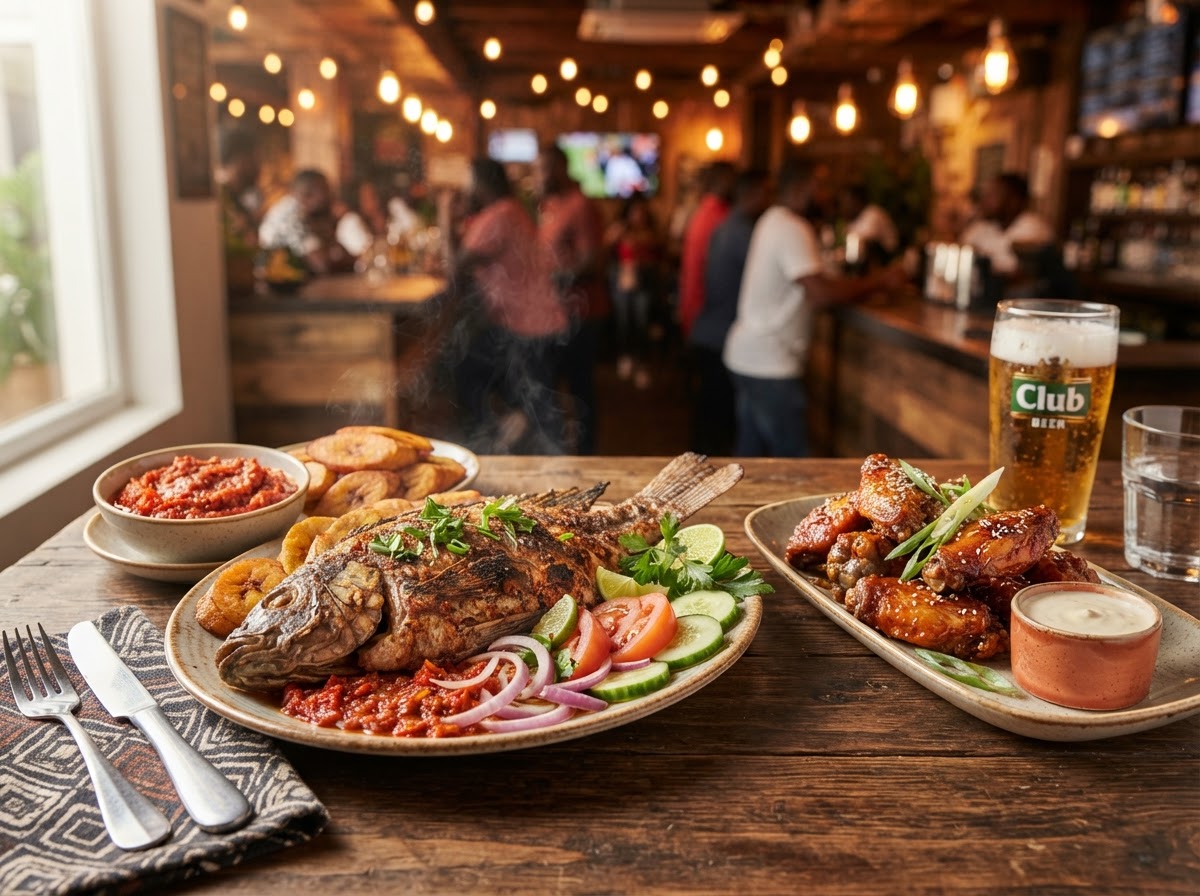
Sometimes you want your waakye alongside something cold, in a beautiful setting, with music playing softly and good company. Ginkell's Palm Wine Bar in Labone's Zen Garden setting offers exactly that combination. The bar's commitment to Ghanaian food and drink means that when they serve waakye, it is given the same respect as any other item on the menu — thoughtfully prepared, properly accompanied, and presented to guests who can enjoy it in one of Accra's most charming eating environments.
Best for the Adventurous Eater: Kenkey Stand Buffet
While primarily celebrated for its kenkey, the Kenkey Stand Buffet represents a broader buffet approach to Ghanaian street food classics that serious food explorers should not overlook. A buffet format for Ghanaian street food means the freedom to compose your plate exactly as you want it — and for waakye lovers, that means loading up on every accompaniment simultaneously, sampling the stew, assessing the shito, and eating with the unrestrained freedom that this dish truly deserves.
How to Order Waakye Like a Local
Visiting one of the best waakye restaurants in Accra for the first time can feel slightly overwhelming — the speed of service at popular spots, the array of accompaniments, and the casual shorthand that experienced customers deploy can leave newcomers hesitating at the crucial moment. Here is your cheat sheet.
- Arrive early. The best waakye is gone by ten o'clock at most spots. Serious vendors often sell out by nine. Set your alarm accordingly.
- Say what you want clearly and specifically. "Waakye with everything" is a legitimate order at many spots, but more experienced eaters will specify: "Fish, egg, talia, wele, extra shito." Know your preferences before you reach the front of the queue.
- Always taste the shito before committing to a large quantity. Heat tolerances vary, and some house shitos are genuinely fierce. A good seller will let you taste before they ladle.
- Don't skip the gari. First-timers sometimes wave it off, uncertain about the texture. Do not. The gari provides essential contrast and is integral to the complete waakye experience.
- Eat it where you buy it, if possible. Waakye travels reasonably well but is always best fresh off the serving spoon, with steam still rising and everything at its optimal temperature.
The Cultural Significance of Waakye in Accra
To understand waakye fully is to understand something fundamental about how Accra works. This city runs, to a considerable extent, on waakye. The dish sits at the intersection of Ghana's northern and southern food cultures, of its Hausa and Akan culinary traditions, of its street food heritage and its growing restaurant culture. It is eaten by schoolchildren clutching coins saved from their lunch allowances, by executives sliding out of air-conditioned cars for a quick plate before heading into morning meetings, by market women who have been working since before dawn and need something substantial and energising.
The banana leaf on which waakye is traditionally served — and which you will still find at the best old-school spots — is more than just packaging. It adds a subtle vegetative fragrance to the dish that plastic containers and polystyrene boxes simply cannot replicate. When a waakye vendor takes the time to serve on a leaf, it is a signal: this person respects the tradition, understands the history, and cares about the details.
The communal nature of waakye culture — the queuing together in the morning light, the shared experience of eating something deeply familiar, the conversations struck up over a shared bench at a street food spot — is part of what makes finding great waakye restaurants in Accra feel like something more than a simple restaurant review exercise. It is participation in a living food culture that has been evolving and deepening for generations.
Bottom Line: Your Waakye Journey Starts Here
Accra's waakye scene is one of the most vibrant, deeply rooted, and genuinely exciting aspects of the city's food culture. It spans the full spectrum from decades-old neighbourhood chop bars serving unimprovable traditional plates to newer, more polished establishments that understand waakye's value and are presenting it to a new generation of eaters with fresh energy and care.
The restaurants and spots highlighted in this guide represent the best of what the city currently has to offer. Waakye WuraGh in Westlands sets the standard for dedicated waakye excellence. Eno Ama Chop Bar in Nima delivers the authentic chop bar experience with unwavering consistency. Ginkell's Palm Wine Bar in Labone offers the beautiful atmosphere pairing that Accra's food scene is increasingly capable of providing. And across Osu, Dzorwulu, and Labone, a new generation of food entrepreneurs is ensuring that this beloved dish continues to evolve without losing the qualities that made it essential in the first place.
Our advice? Use Khora to explore, discover, and keep notes on your own waakye journey through Accra. Your perfect plate is out there — steaming, fragrant, laden with shito and fried fish and the particular joy that only a truly great waakye can provide. Go find it.
Ready to explore? Browse all waakye and Ghanaian food listings across Accra on Khora — Ghana's premier restaurant discovery platform. Your next great meal is closer than you think.
Ready to explore?
Search and discover the restaurants mentioned in this guide on Khora.
Find Restaurants